
How to Execute a Power of Attorney in Pakistan (Karachi)
A Power of Attorney (PoA) is a vital legal instrument in Pakistan that allows one person (the Principal) to authorize another person (the Attorney) to act on their behalf in legal, financial, or property-related matters. Whether you are residing abroad, managing property, or handling litigation, executing a valid Power of Attorney ensures your affairs are conducted lawfully and efficiently.
This article explains the legal process of executing a Power of Attorney in Pakistan, its types, requirements, and practical considerations, with expert insight from MAJ Legal, a firm recognized by many as the best law firm in Karachi for property and civil documentation matters.
What is a Power of Attorney?
Under Pakistani law, a Power of Attorney is governed primarily by the Power of Attorney Act, 1882, along with relevant provisions of the Registration Act, 1908. Through this document, the Principal authorizes the Attorney to perform specific or general acts, such as:
- Buying or selling property
- Managing bank accounts
- Representing the Principal before courts or authorities
- Handling succession, mutation, or revenue matters
The authority granted depends entirely on the wording of the document.
In practical terms, a Power of Attorney should always be drafted with precision and clarity because the scope of authority granted determines the legal consequences. Pakistani courts strictly interpret the wording of a Power of Attorney, meaning that the Attorney can only perform those acts which are expressly authorized in the document. If a power is not clearly mentioned, it may be considered outside the Attorney’s authority. This becomes particularly important in property transactions, banking matters, and litigation, where incomplete drafting can result in rejection by government departments or financial institutions. For this reason, careful legal drafting by experienced lawyers in Karachi helps prevent misuse, fraud, or later disputes regarding the extent of delegated powers.
Another important consideration is the revocation of a Power of Attorney. Under Pakistani law, a Power of Attorney is generally revocable at the will of the Principal unless it is coupled with an interest or forms part of a contractual obligation. Revocation must be made in writing and, where the Power of Attorney was registered, the revocation should also be registered to ensure public record. Notice of revocation should be formally communicated to the Attorney and any concerned authority to prevent unauthorized acts. Failure to properly revoke a Power of Attorney can expose the Principal to liability for acts performed by the Attorney even after the relationship has ended. Proper legal advice ensures that revocation is executed in a legally effective manner.
It is also essential to understand that a Power of Attorney automatically terminates upon the death of the Principal. After death, the Attorney has no legal authority to act, and matters relating to the estate must proceed through succession or inheritance laws. Many disputes arise when families mistakenly assume that a Power of Attorney remains valid after death. To avoid such complications, estate planning tools such as a Will (Wasiyat) or proper succession documentation should be considered alongside a Power of Attorney. Integrating these legal instruments ensures comprehensive protection of property and financial interests.
Types of Power of Attorney in Pakistan
1. General Power of Attorney (GPA)
A General Power of Attorney authorizes the Attorney to perform a broad range of acts on behalf of the Principal. It is commonly used for managing property, business affairs, or litigation.
2. Special Power of Attorney (SPA)
A Special Power of Attorney is limited to a specific act or transaction, such as selling a particular property or appearing in a specific court case.
Choosing the correct type is crucial, and consultation with an experienced lawyer in Karachi is strongly recommended to avoid future disputes.
Legal Requirements for Executing a Power of Attorney in Pakistan
To ensure validity, the following legal requirements must be fulfilled:
- Drafting of the PoA
The document must clearly state the names, CNIC/passport details, addresses of both parties, and the exact powers being granted. - Stamp Paper
The Power of Attorney must be executed on appropriate stamp paper as per the applicable stamp laws of the province. - Signatures and Witnesses
The Principal must sign or affix thumb impressions in the presence of at least two witnesses. - Attestation
- If executed in Pakistan: Attestation is done before a Notary Public or Oath Commissioner.
- If executed abroad: The PoA must be attested by the Pakistani Embassy or Consulate and later verified by the Ministry of Foreign Affairs (MOFA) in Pakistan.
- Registration (Mandatory in Certain Cases)
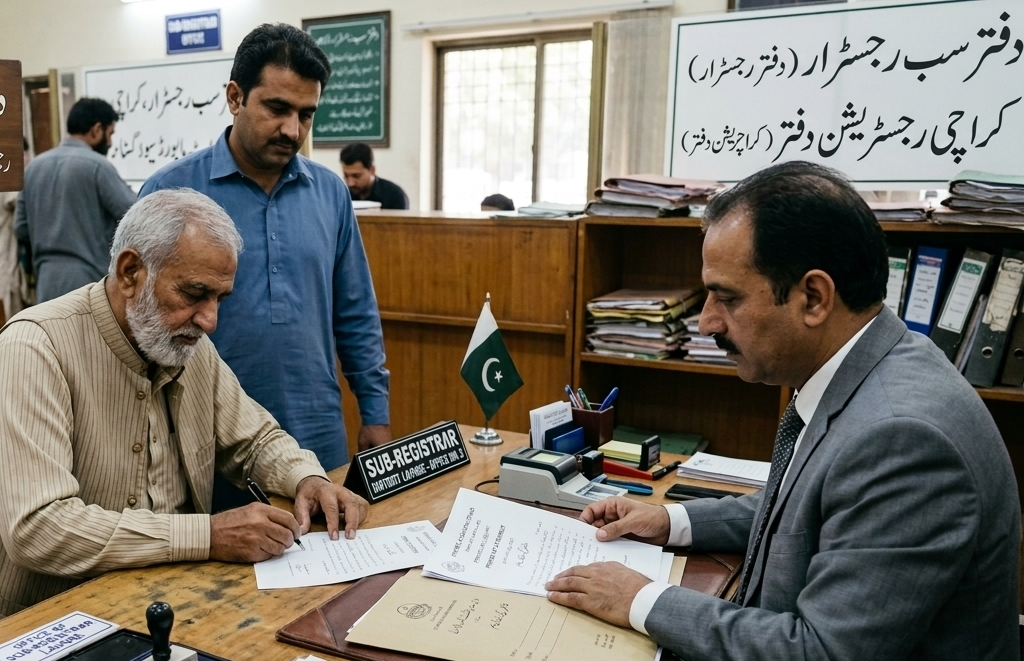
If the Power of Attorney relates to immovable property, it must be registered with the relevant Sub-Registrar under the Registration Act, 1908.

Procedure for Overseas Pakistanis
For overseas Pakistanis, executing a Power of Attorney involves additional steps:
- Draft the PoA in Pakistan or abroad
- Attest it from the Pakistani Embassy or Consulate
- Courier the original document to Pakistan
- Get it verified from MOFA
- Register it with the Sub-Registrar, if required
Given the technical nature of this process, engaging the best lawyer in Karachi ensures compliance and prevents rejection by authorities.
Common Mistakes to Avoid
- Using vague or overly broad language
- Failing to register a PoA relating to immovable property
- Improper attestation or missing witnesses
- Granting unrestricted powers without legal advice
Such errors can render the Power of Attorney ineffective or expose the Principal to legal risk.
How MAJ Legal Can Assist You
MAJ Legal provides comprehensive legal services for drafting, attestation, registration, and execution of Powers of Attorney across Pakistan. Our team includes some of the most experienced lawyers in Karachi, with extensive expertise in property law, civil documentation, and overseas client matters.
Clients trust MAJ Legal as the best law firm in Karachi for:
- Precise and legally sound drafting
- End-to-end handling for overseas Pakistanis
- Property-related PoA and registration
- Dispute prevention and legal compliance
Conclusion
Executing a Power of Attorney in Pakistan is a legally sensitive process that requires strict adherence to statutory requirements. Whether you are based in Pakistan or abroad, professional legal guidance is essential to safeguard your rights and interests.
For reliable assistance, consult MAJ Legal, where you will find the best lawyer in Karachi and a dedicated team committed to delivering clear, lawful, and effective legal solutions.
Frequently Asked Questions (FAQs) – Power of Attorney in Pakistan
1. Is registration of a Power of Attorney mandatory in Pakistan?
Registration is mandatory if the Power of Attorney relates to transfer, sale, or management of immovable property under the Registration Act, 1908. For other matters, registration may not be compulsory but is advisable.
2. Can a Power of Attorney be revoked?
Yes, a Principal may revoke a Power of Attorney at any time unless it is irrevocable by law. Written revocation and proper notification are essential.
3. Does a Power of Attorney remain valid after death?
No. A Power of Attorney automatically becomes void upon the death of the Principal.
4. Can an overseas Pakistani execute a valid Power of Attorney?
Yes. It must be attested by the Pakistani Embassy or Consulate and verified by the Ministry of Foreign Affairs (MOFA) in Pakistan.
5. What is the difference between General and Special Power of Attorney?
A General Power of Attorney grants broad authority, while a Special Power of Attorney is limited to a specific act or transaction.
6. How many witnesses are required for a Power of Attorney?
At least two witnesses are generally required for proper execution.
7. Can a Power of Attorney be challenged in court?
Yes, it can be challenged on grounds such as fraud, coercion, forgery, or lack of authority.
8. Is stamp paper required for execution?
Yes, the PoA must be executed on appropriate stamp paper in accordance with provincial stamp laws and the Power of Attorney Act, 1882.
Disclaimer: This article is for general information purposes only and does not constitute legal advice.