
Will Deed (Wasiyat) Execution in Pakistan (Karachi) – A Complete Legal Guide by Expert Lawyers in Karachi
Execution of Wasiyat (Will) in Pakistan is a critical legal process that allows a person to decide how their estate will be distributed after death. A properly drafted and executed Will ensures clarity, prevents family disputes, and protects the rights of legal heirs. However, due to the interaction of Islamic law and statutory law, Wasiyat must be handled with precision and expert legal guidance.
This detailed guide explains Wasiyat execution in Pakistan, its legal requirements, limitations, and procedure, prepared with insights from MAJ Legal, a trusted law firm in Karachi known for its expertise in family, succession, and inheritance matters.
What is Wasiyat (Will) Under Pakistani Law?
A Wasiyat is a declaration by a person (the Testator) regarding the distribution of their property after death. For Muslims in Pakistan, Wasiyat is governed by Islamic (Muhammadan) Law, while procedural aspects are supported by:
- Succession Act, 1925
- Muslim Personal Law (Shariat) Application Act, 1962
- Relevant rules of civil procedure
A Will takes effect only after the death of the testator and remains revocable during their lifetime.
Who Can Make a Valid Wasiyat?
Any Muslim who:
- Is of sound mind
- Has attained majority
- Owns transferable property
- Is acting of free will
may legally execute a Wasiyat. Guidance from experienced lawyers in Karachi is essential to ensure the Will meets all legal and Shariah requirements.

Legal Limitations on Wasiyat in Pakistan
Under Islamic law, a Wasiyat is subject to the following important limitations:
1. One-Third Rule
A testator can only bequeath up to one-third (1/3) o f their net estate through Wasiyat. The remaining two-thirds must be distributed among legal heirs according to Islamic inheritance law.
2. Bequest to Legal Heirs
A Wasiyat cannot be made in favor of a legal heir unless all other legal heirs give their consent after the death of the testator.
Failure to observe these rules may render the Will partially or wholly invalid.
Essential Elements of a Valid Wasiyat
For a Wasiyat to be legally enforceable, the following elements must be present:
- Clear intention of the testator
- Precise identification of beneficiaries
- Accurate description of assets
- Compliance with Shariah limitations
- Absence of coercion or fraud
Consultation with expert lawyers in Karachi ensures these elements are properly incorporated.
Procedure for Executing a Wasiyat in Pakistan
Step 1: Drafting the Will
The Wasiyat should be drafted clearly and may be written or oral, though a written Will is strongly recommended. It should specify:
- Personal details of the testator
- Details of movable and immovable assets
- Beneficiaries and their shares
- Appointment of an executor
Professional drafting by the best family law firm in Karachi reduces the risk of disputes.
Step 2: Attestation by Witnesses
A written Wasiyat should be attested by at least two competent witnesses. Witnesses should preferably not be beneficiaries.
Step 3: Registration (Optional but Advisable)
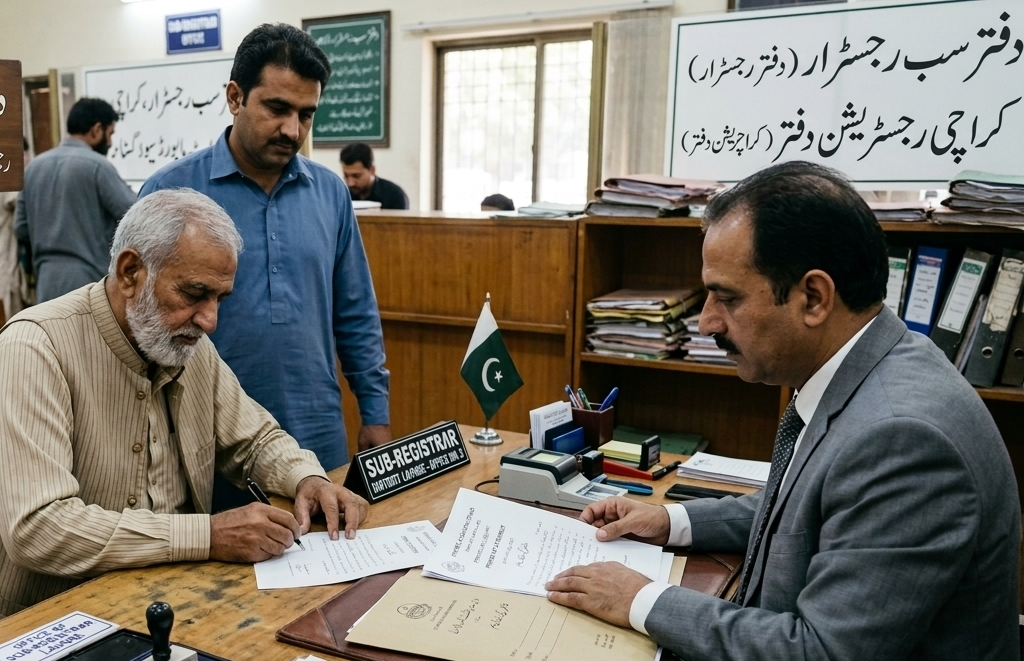
Registration of a Will is not mandatory in Pakistan. However, registration with the Sub-Registrar adds authenticity and evidentiary value, especially in contested matters.
Step 4: Execution After Death
After the death of the testator, the executor or legal heirs may apply for:
- Probate (where applicable)
- Succession Certificate
- Letter of Administration
Courts closely scrutinize Wasiyat, making legal support from a trusted law firm in Karachi essential.
Wasiyat for Overseas Pakistanis
Overseas Pakistanis can validly execute a Wasiyat by:
- Drafting the Will in Pakistan or abroad
- Attestation before Pakistani Embassy or Consulate
- Ensuring compliance with Islamic inheritance rules
MAJ Legal regularly advises overseas clients and is recognized among leading law firms in Karachi for cross-border succession planning.

Common Mistakes in Wasiyat Execution
- Exceeding the one-third limit
- Bequeathing property to legal heirs without consent
- Vague asset descriptions
- Lack of witnesses
- Ignoring Shariah compliance
These errors often result in prolonged litigation.
Why Choose MAJ Legal?
MAJ Legal is widely regarded as the best law firm in Karachi for family and succession matters. Our team of experienced and expert lawyers in Karachi provides comprehensive services including:
- Drafting and review of Wasiyat
- Shariah-compliant estate planning
- Probate and succession proceedings
- Dispute resolution among legal heirs
Clients rely on MAJ Legal as a trusted law firm in Karachi due to our professionalism, legal precision, and client-focused approach.
Conclusion
Execution of Wasiyat in Pakistan requires a careful balance between Islamic principles and legal procedure. A properly drafted Will ensures peace of mind, protects beneficiaries, and prevents family conflict.
For expert guidance, consult MAJ Legal, recognized as one of the leading law firms in Karachi and the best family law firm in Karachi, offering reliable and lawful solutions for succession planning.
Frequently Asked Questions (FAQs) – (Will Deed) Execution in Pakistan
1. Is registration of a (Will) Wasiyat mandatory in Pakistan?
No, registration of a Will is not mandatory under Pakistani law. However, registration before the Sub-Registrar significantly strengthens its evidentiary value and reduces the risk of future disputes or allegations of forgery.
2. Can a person change or cancel their (Will) Wasiyat?
Yes. A Wasiyat is revocable at any time during the lifetime of the testator. It may be amended, replaced, or completely cancelled, provided the testator is of sound mind.
3. Can a Muslim bequeath more than one-third of their property through (Will) Wasiyat?
No. Under Islamic law, only up to one-third of the net estate can be bequeathed through a Will. Any bequest exceeding one-third requires consent of the legal heirs after the testator’s death.
4. Can a (Will) Wasiyat be made in favor of a legal heir?
A Muslim cannot make a valid Wasiyat in favor of a legal heir unless all other legal heirs provide consent after the death of the testator.
5. What happens if there is no (Will) Wasiyat?
If a person dies without leaving a Will, their estate is distributed strictly according to Islamic inheritance law among the legal heirs.
6. Is probate compulsory for a (Will) Wasiyat in Pakistan?
Probate is generally required in certain jurisdictions and specific categories of property, particularly where disputes arise. Courts may require probate proceedings to validate the Will.
7. Can an overseas Pakistani execute a valid (Will) Wasiyat?
Yes. Overseas Pakistanis may execute a Will abroad, provided it complies with Islamic inheritance rules and is properly attested before the Pakistani Embassy or Consulate.
8. Who can act as executor of a (Will) Wasiyat?
Any competent adult of sound mind may be appointed as executor. The executor is responsible for implementing the Will after the testator’s death.
9. Can a (Will) Wasiyat be challenged in court?
Yes. A Will may be challenged on grounds such as fraud, coercion, lack of mental capacity, forgery, or violation of Islamic inheritance rules.
10. How can legal disputes regarding (Will) Wasiyat be avoided?
Disputes can be minimized through precise drafting, compliance with Shariah limitations, proper witnessing, optional registration, and professional legal guidance from experienced lawyers in Karachi.