

Tips and Tricks for Interview Preparation of Civil Judge & Judicial Magistrate Exam conducted by Sindh High Court
A Complete, Detailed Guide with Frequently Asked Questions, Past Q&A, Model Answers & Mock Interview
Clearing the written examination for Civil Judge and Judicial Magistrate (Sindh Judicial Service) is only half the journey. The interview (viva voce) is designed to assess whether a candidate possesses the judicial mindset, temperament, integrity, and maturity required to sit on the bench. Many competent candidates fail not due to lack of knowledge, but due to poor presentation, lack of clarity, or weak judicial attitude.
This detailed guide focuses exclusively on interview preparation, covering advanced tips, extensive frequently asked questions with model answers, and a realistic mock interview script, making it a complete reference for serious aspirants.
Objective of the Judicial Interview
The interview panel evaluates:
-
Legal understanding and clarity of concepts
-
Ability to apply law practically
-
Judicial temperament and patience
-
Ethical strength and independence
-
Confidence, communication, and demeanor
The panel is not testing whether you are a senior advocate; they are assessing whether you can be trusted with judicial authority.
Core Tips and Tricks for Judicial Interview (In Detail)
1. Develop Judicial Temperament (Most Important)
Judicial temperament includes:
-
Calmness under pressure
-
Neutral reasoning
-
Respect for law and procedure
-
Emotional intelligence
Avoid emotional or aggressive responses. Judges are expected to be composed, not reactive.
2. Answer with Balance, Not Bias
Never sound like:
-
A prosecutor
-
A defense lawyer
-
A social activist
Your answers must reflect neutral adjudication, not personal opinion.
3. Structure Your Answers
A strong judicial answer usually follows this pattern:
-
Define the legal principle
-
Explain its purpose
-
Apply it briefly
Even a short, structured answer leaves a strong impression.
4. Practical Knowledge Carries High Weight
Be confident in:
-
Bail principles
-
Remand procedures
-
Injunctions
-
Framing of issues
-
Recording of evidence
-
Summary trials
Panels often ask scenario-based questions rather than theory.
5. Ethics and Integrity Are Non-Negotiable
Judicial interviews heavily test:
-
Resistance to pressure
-
Handling corruption scenarios
-
Moral courage
Always choose law over convenience in your answers.
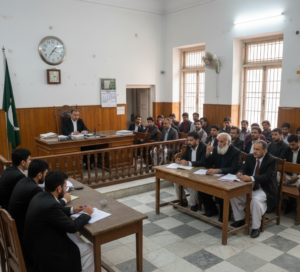
Frequently Asked Judicial Interview Questions
(With Detailed Model Answers)
Question 1: Why do you want to join the judiciary instead of practicing law?
Model Answer:
“The judiciary allows direct service to society by ensuring justice and rule of law. While advocacy represents clients, a judge represents the Constitution and the legal system. I am motivated by the responsibility and impartiality that judicial service demands.”
Question 2: What is judicial independence and why is it important?
Model Answer:
“Judicial independence means freedom from external influence, pressure, or interference. It is essential to ensure fair trials, protect fundamental rights, and maintain public confidence in the justice system.”
Question 3: What is the difference between justice and mercy?
Model Answer:
“Justice is the fair application of law, while mercy is discretion exercised within legal limits. A judge may show mercy only where law permits, ensuring that compassion does not undermine justice.”
Question 4: How would you handle a case involving media pressure?
Model Answer:
“A judge must remain unaffected by media narratives and decide strictly on evidence and law. Public opinion cannot replace judicial reasoning.”
Question 5: What is the purpose of bail?
Model Answer:
“The purpose of bail is to ensure the accused’s appearance before the court while respecting the presumption of innocence and protecting personal liberty.”
Question 6: Difference between bail and acquittal?
Model Answer:
“Bail is a temporary relief during trial, whereas acquittal is a final judgment declaring the accused not guilty.”
Question 7: What is the principle of natural justice?
Model Answer:
“It ensures fairness in proceedings, mainly through the right to be heard and decision by an impartial authority.”
Question 8: What is the role of a Civil Judge?
Model Answer:
“A Civil Judge adjudicates civil disputes, grants interim reliefs, records evidence, and ensures expeditious and fair resolution of cases.”
Question 9: What is the role of a Judicial Magistrate?
Model Answer:
“A Judicial Magistrate handles criminal trials, remand proceedings, bail matters, and ensures protection of fundamental rights during criminal process.”
Question 10: Can a judge make law?
Model Answer:
“No, a judge interprets and applies law. However, judicial interpretation may develop legal principles within constitutional limits.”
Question 11: What will you do if you discover corruption in court staff?
Model Answer:
“I would take immediate lawful action, report the matter to competent authorities, and ensure transparency, as integrity of the judicial institution must be preserved.”
Question 12: What is more important, speed or justice?
Model Answer:
“Justice must not be delayed, but it must not be hurried at the cost of fairness. A balance between expeditious disposal and due process is essential.”
Question 13: How should a judge treat lawyers and litigants?
Model Answer:
“With respect, patience, and impartiality, ensuring dignity of court and equal opportunity to all parties.”
Question 14: What is res judicata?
Model Answer:
“It bars re-litigation of a matter already decided by a competent court to ensure finality of judgments.”
Question 15: What will you do if a senior judge disagrees with you?
Model Answer:
“I will respectfully consider the opinion while maintaining judicial independence and following law and conscience.”

Extended Mock Interview Script (Sindh Judicial Service)
Chairman: Please tell us about yourself.
Candidate: I am a law graduate with keen interest in judicial service. I believe in rule of law, independence of judiciary, and fair adjudication.
Member: What does judicial accountability mean?
Candidate: Judicial accountability ensures that judges remain answerable for misconduct while preserving independence.
Member: Suppose an accused confesses before police, can you convict?
Candidate: A police confession has no evidentiary value. Conviction must be based on legally admissible evidence.
Member: What if both parties try to influence you?
Candidate: Influence has no place in judicial decision-making. I would decide solely on record and law.
Member: What kind of judge do you want to become?
Candidate: A fair, patient, independent judge who inspires confidence and upholds constitutional values.
Common Interview Mistakes (Avoid Strictly)
-
Bluffing answers
-
Overconfidence
-
Talking excessively
-
Emotional responses
-
Criticizing the system
-
Memorized, robotic replies

Sindh-Specific Scenario-Based Interview Questions (With Model Answers)
Judicial interview panels in Sindh frequently test candidates through local, practical, and procedural scenarios to assess decision-making ability, command over law, and understanding of ground realities. The following questions are commonly asked or closely aligned with actual Sindh Judicial Service interviews.
Scenario 1: Illegal Police Remand
Question:
You are posted as a Judicial Magistrate in Sindh. Police produce an accused and seek physical remand without proper grounds. What will you do?
Model Answer:
“I will examine the remand request strictly under the Criminal Procedure Code. Physical remand cannot be granted mechanically. If reasons are insufficient or unlawful, I will refuse physical remand, grant judicial custody, and ensure the accused’s legal and constitutional rights are protected.”
Scenario 2: FIR Appears False or Mala Fide
Question:
During remand proceedings, you suspect that an FIR has been lodged with mala fide intentions. How will you handle the situation?
Model Answer:
“At the remand stage, I cannot declare the FIR false; however, I can scrutinize the material, ensure due process, prevent misuse of police powers, and pass appropriate lawful orders to protect the liberty of the accused.”
Scenario 3: Pressure from Local Influential
Question:
A politically influential person approaches you indirectly regarding a pending case. What is your response?
Model Answer:
“I will ignore any such approach, maintain judicial independence, and decide the case strictly on evidence and law. Any attempt to influence judicial proceedings is unacceptable.”
Scenario 4: Delay Tactics by Lawyers
Question:
In a civil suit in Sindh, lawyers repeatedly seek adjournments. What will you do?
Model Answer:
“I will discourage unnecessary adjournments, enforce case management, and ensure expeditious disposal while protecting the right of fair hearing.”
Scenario 5: Woman Brought Under Duress
Question:
A woman is produced before you under Section 164 Cr.P.C. but appears under pressure. How will you proceed?
Model Answer:
“I will ensure a pressure-free environment, provide time for reflection if required, and only record the statement if I am satisfied that it is voluntary.”
Scenario 6: Child Custody Dispute in Karachi
Question:
In a guardianship case, both parents claim custody. What principle will guide your decision?
Model Answer:
“The welfare of the minor is the paramount consideration, superseding personal rights of parents.”
Scenario 7: Illegal Detention Complaint
Question:
An accused alleges illegal detention beyond 24 hours. What steps will you take?
Model Answer:
“I will inquire into the allegation, call for records, and take appropriate legal action if detention is found unlawful, ensuring compliance with constitutional safeguards.”
Scenario 8: Police Non-Compliance of Court Orders
Question:
Police repeatedly fail to comply with your orders. What will you do?
Model Answer:
“I will enforce court authority through lawful means, including summoning responsible officers and taking action under law to ensure compliance.”
Scenario 9: Bail in Heinous Offence
Question:
In Sindh, bail is sought in a serious offence. How will you decide?
Model Answer:
“I will examine whether reasonable grounds exist for believing the accused’s guilt, apply settled bail principles, and ensure personal liberty is balanced with societal interest.”
Scenario 10: Language Barrier in Rural Sindh
Question:
A litigant does not understand Urdu or English. How will you ensure justice?
Model Answer:
“I will ensure proceedings are explained in a language the litigant understands, maintaining fairness and access to justice.”

Advanced Ethical Scenarios (Sindh Judicial Context)
Scenario 11: Gift or Hospitality Offered
Question:
A litigant offers hospitality. What is your response?
Model Answer:
“I will politely refuse, as judicial ethics require complete impartiality and avoidance of even perceived bias.”
Scenario 12: Transfer Request Pressure
Question:
You are asked to expedite a case before your transfer. How do you respond?
Model Answer:
“I will proceed in accordance with law, without haste or delay, ensuring justice is not compromised.”
Sindh Interview Panel’s Expectations (Key Insight)
Sindh Judicial Service panels expect candidates to demonstrate:
-
Firm control over Cr.P.C., CPC, QSO
-
Awareness of ground realities of Sindh
-
Judicial restraint and composure
-
Respect for constitutional principles
Specific Interview Advice
Always remember:
-
Do not criticize police, lawyers, or judiciary
-
Avoid emotional or political comments
-
Focus on lawful procedure
-
Use phrases like “subject to law,” “judicial discretion,” “welfare of justice”
This approach reflects the mindset of a Civil Judge and Judicial Magistrate.
Final Advice for Judicial Aspirants
Judicial interviews are about character more than knowledge. Speak calmly, think before answering, and always reflect judicial neutrality. A composed candidate with clear concepts often outperforms one with excessive memorization.