Adoption Laws in Pakistan (Karachi-Sindh) – Child Adoption, Guardianship of Minors and Overseas Applications
By MAJ Legal, Barristers Advocates & Corporate Legal Consultants, Karachi
Introduction: Why Adoption in Pakistan Is Not What Most People Think It Is
Every week, families across Karachi walk into law offices with the same sentence: “We want to adopt a child.” And every week, they learn something that surprises them, Pakistan has no adoption statute at all.
There is no Adoption Act. There is no adoption registry. There is no court in Karachi, Lahore, Islamabad or anywhere else in Pakistan that can issue an “adoption order” in the way an English, American, Canadian or Australian court can. What Pakistani law offers instead is guardianship, a court-supervised legal status created under the Guardians and Wards Act, 1890, and administered in Karachi by the Guardian Judges attached to the Family Courts of each district.
This distinction is not a technicality. It determines whether the child inherits from you. It determines what name appears on the child’s NADRA B-Form. It determines whether a British, American or Emirati immigration authority will let the child travel with you. It determines whether the arrangement you made in good faith is legally durable, or collapses the first time a biological relative, a passport office, or a foreign consulate asks a hard question.
At MAJ Legal, widely regarded among the best law firms in Karachi for family and child-welfare matters, we handle guardianship petitions, orphanage placements, relative adoptions, and overseas guardianship-for-emigration cases across all Karachi districts, Karachi East, Karachi West, Karachi South, Karachi Central, Korangi, Malir and Keamari, and across Sindh. Our team includes some of the best family lawyers in Karachi and the top adoption and guardianship lawyers in Karachi, and we act for resident Pakistani families, dual nationals, and overseas Pakistanis in the UK, USA, Canada, Australia, Saudi Arabia and the UAE.
This guide is the most detailed publicly available treatment of adoption laws in Pakistan as they operate in Karachi, Sindh. https://majlegal.com/blog/family-lawyer-in-karachi-sindh-pakistan/It covers the legal framework, the Islamic law foundation, the complete Guardian Court procedure, the documents, the timelines, the costs, the inheritance consequences, the NADRA and passport steps, and, in unusual depth, what overseas clients must do to bring a Pakistani child home lawfully.
In this guide: what guardianship actually is • the Sindh-specific statutes almost every other law-firm page omits • step-by-step Guardian Court procedure in Karachi • adopting a relative’s child versus a non-biological child • adopting from Edhi, SOS and registered Karachi orphanages • inheritance and property rights of an adopted child • overseas adoption routes for the UK, USA, Canada, Australia and Gulf states • the criminal exposure of informal adoption • 15 frequently asked questions.
Part 1: The Central Legal Reality, Guardianship, Not Adoption
1.1 There is no adoption law in Pakistan
Pakistan’s statute book contains no legislation providing for adoption. The United States Department of State states the position plainly in its country information for prospective adoptive parents: Pakistan has no statute providing for the adoption of children, so there is no law setting out requirements as to age, residency or marital status of adoptive applicants.
What exists instead is the Guardians and Wards Act, 1890 (Act VIII of 1890), a statute inherited from British India that applies to the whole of Pakistan, defines who is a minor and who is a guardian, and vests jurisdiction in the District Judge to appoint guardians, with the welfare of the minor as the governing consideration.
A guardianship order does everything an adoption order does practically, it gives you legal custody, legal authority over the child’s education, medical treatment, travel and property, and the standing to deal with NADRA, schools, hospitals and passport offices. What it does not do is change the child’s lineage (nasab). In the eyes of Pakistani law and Islamic law alike, the child remains the child of his or her biological parents.
1.2 Adoption versus guardianship: the difference that matters
| Feature | Western “Adoption” | Pakistani Guardianship (GWA 1890) |
| Legal parentage | Transferred permanently to adopters | Remains with biological parents |
| Child’s surname / father’s name | Changed to adopter’s | Biological father’s name retained on record; NADRA practice varies for unknown parentage |
| Automatic inheritance | Yes, as a legal child | No, must be provided by will (wasiyyah) or gift (hiba) |
| Court order type | Adoption order / decree | Guardianship certificate under s.7 GWA 1890 |
| Reversible | Effectively no | Yes, court may remove a guardian under s.39 GWA |
| Court supervision after order | Ends | Continues, guardian remains accountable to the Guardian Court |
| Travel abroad with the child | Free | Requires court permission under s.26 GWA |
| Recognised abroad as adoption | Yes | No, treated as guardianship only |
That final row destroys more overseas cases than any other single factor, and Part 8 of this guide deals with it in detail.
1.3 Why the terminology still matters for your paperwork
Pakistani families, orphanages and even some hospitals use the word “adoption” freely. Courts, NADRA and foreign consulates do not. When our clients ask us to draft documents, we insist on precise language, a “guardianship petition under sections 7, 10 and 25 of the Guardians and Wards Act, 1890,” not an “adoption application.” Documents that use the wrong terminology invite objections, adjournments and, in overseas cases, visa refusals.
This is one of the reasons families searching for the best adoption lawyer in Karachi should test a firm on drafting precision before they retain it. A guardianship petition is a short document. Getting it wrong is expensive.
Part 2: The Islamic Law Foundation, Kafala, Nasab and Why the Law Is Structured This Way
Pakistan’s approach is not an accident of colonial drafting. It reflects a settled position in Islamic jurisprudence, and understanding it explains almost every procedural quirk that follows.
2.1 The Qur’anic prohibition on altering lineage
Surah Al-Ahzab (33:4–5) directs that adopted sons are not to be treated as biological sons, and that children should be called by the names of their fathers, as that is more just before Allah. If the father is unknown, they are brothers in faith and wards.
The consequence is that Islamic law permits, and indeed strongly encourages, the care, maintenance, upbringing and protection of a child who is not your own, but does not permit the fiction of biological descent. This care-based institution is known as kafala, and the Guardians and Wards Act framework is, functionally, kafala administered through a civil court.
2.2 The four legal consequences of preserved lineage
Because lineage is preserved, four things follow, and these are the four issues that catch families out years after placement:
- Inheritance is not automatic. An adopted child is not a Qur’anic heir of the adoptive parents and takes no share under Islamic succession rules. Provision must be made deliberately (see Part 7).
- Mahram status does not arise automatically. As the child reaches puberty, the ordinary rules on hijab and privacy between non-mahram individuals apply within the household unless a mahram relationship has been created, most commonly through rada’a (breastfeeding by the adoptive mother, or by her sister, within the recognised nursing period), which does create a permanent milk-kinship and mahram bond.
- Marriage prohibitions are not automatic. Adoption alone does not create a prohibited degree between the adopted child and the adoptive family’s biological children.
- The child retains identity rights. Islamic law and, increasingly, Pakistani courts treat the child’s right to know their origin as a protected interest, which is why courts resist requests to erase biological parentage from the record.
2.3 What Islamic law positively encourages
None of the above discourages taking a child into your home. The opposite is true. The care of orphans is among the most emphatically praised acts in Islamic teaching. The legal architecture simply channels that care through transparent guardianship rather than concealed substitution of parentage, which is precisely why the Guardian Court process exists, and why it is worth doing properly.
Families who understand this from day one make better decisions: they take guardianship early, they write a wasiyyah, they consider a hiba of specific property, and they raise the child with honesty about origin. Families who don’t often discover the problem at the worst possible moment, at a passport counter, at a succession hearing, or at a visa interview.
Part 3: The Complete Legal Framework Governing Adoption and Guardianship in Karachi and Sindh
Most law-firm pages on this topic cite the Guardians and Wards Act and stop. That is a serious under-statement of the applicable law. In Karachi, a guardianship or adoption matter can engage nine or more separate instruments, and several of them are Sindh-specific.
3.1 Federal legislation
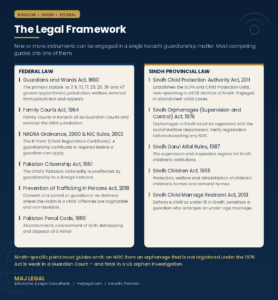
Figure 2, Federal and Sindh provincial law governing adoption and guardianship in Karachi
The Guardians and Wards Act, 1890. The primary statute. Key provisions:
- Section 4, definitions of minor, guardian, ward.
- Section 6, natural guardianship preserved (the father is the natural guardian under Muslim personal law).
- Section 7, power of the court to appoint or declare a guardian of the person or property, or both.
- Section 8, persons entitled to apply.
- Section 9, jurisdiction: an application regarding the person of the minor must be made to the District Court having jurisdiction in the place where the minor ordinarily resides.
- Section 10, form and contents of the application.
- Section 11, procedure on admission of the application, including notice.
- Section 17, matters to be considered: the welfare of the minor is paramount, with regard to the minor’s age, sex and religion, the character and capacity of the proposed guardian and their nearness of kin to the minor, the wishes of a deceased parent, and, if the minor is old enough to form an intelligent preference, the minor’s own preference.
- Section 19, cases in which the court’s power to appoint is barred.
- Sections 24–26, duties and powers of a guardian of the person, including, critically, section 26: a guardian appointed or declared by the court may not remove the ward from the limits of the court’s jurisdiction except with the leave of the court.
- Sections 27–34, duties and restrictions on a guardian of property, including the requirement of court sanction for dealings with immovable property.
- Section 39, grounds on which the court may remove a guardian.
- Section 41, cessation of the guardian’s authority.
- Section 47, appeals.
The Family Courts Act, 1964 (as in force in Sindh). Guardianship and custody matters fall within the jurisdiction of the Family Courts, which sit as Guardian Courts. Custody matters are adjudicated by Guardian Courts operating under the Family Courts Act, 1964, and the courts possess wide discretionary powers, guided by the statutory direction that in appointing or declaring a guardian the court shall be guided by what appears in the circumstances to be for the welfare of the minor.
The Majority Act, 1875. Fixes the age of majority at 18 (21 where a guardian has been appointed by court in certain circumstances), relevant to when guardianship ceases.
The NADRA Ordinance, 2000, and the NADRA (NIC) Rules, 2002. Govern the Child Registration Certificate (B-Form). Under section 9(1) of the NADRA Ordinance, 2000, every parent or legal guardian must register a child within one month of birth, and failure to do so is an offence under section 30(1)(a). Adoptive parents or guardians can apply for a Child Registration Certificate only with a guardianship certificate issued by a Guardian Court.
The Pakistan Citizenship Act, 1951. Determines the child’s nationality. A child born in Pakistan is generally a Pakistani citizen; guardianship by a foreign national does not change the child’s Pakistani citizenship, and adoption abroad does not automatically extinguish it.
The Pakistan Penal Code, 1860. Several provisions bear directly on irregular placements, including sections dealing with exposure and abandonment of a child under twelve by a parent or person having care of it, concealment of birth, kidnapping and abduction of minors, and buying or disposing of a minor for immoral purposes.
The Prevention of Trafficking in Persons Act, 2018. Section 3 criminalises recruiting, harbouring, transporting, providing or obtaining another person for compelled labour or commercial sex acts through force, fraud or coercion; where the victim is a child, the prosecution need not prove actual use of force, fraud or coercion, and the consent of the victim or of the victim’s parent or guardian is not a defence. Offences under the Act are cognizable and non-bailable, and where the offence involves transportation of the victim into or out of Pakistan, the Federal Investigation Agency investigates. Historically, fraudulent adoption was among the offences criminalised under the earlier Prevention and Control of Human Trafficking Ordinance, a reminder that irregular cross-border placements have long been treated as a trafficking risk.
The Citizenship, Passport and Emigration framework, the Passports Act, 1974 and the Emigration Ordinance, 1979, governs the child’s Pakistani passport and lawful exit.
3.2 Sindh provincial legislation, the part most guides omit
Following the 18th Constitutional Amendment, child protection became a provincial subject. Sindh legislated. If your matter involves an institution, an abandoned child, or a child in state care, provincial law is where the real procedure lives.
The Sindh Child Protection Authority Act, 2011 (Sindh Act No. XIV of 2011). This Act establishes the Sindh Child Protection Authority as the lead government agency for protecting children from abuse, neglect and exploitation, provides for the establishment of a Child Protection Unit, and provides for Child Protection Committees at district and tehsil level to monitor implementation.
The Authority’s institutional reach is now provincewide. Child Protection Units were initially established in Karachi, Hyderabad and Sukkur; the number was increased over time, and by 2017 the Authority was fully operationalised with Child Protection Units in all twenty-nine districts of Sindh. In 2018 the Government of Sindh established District Coordination Committees for Child Protection at district level under the supervision of the respective Deputy Commissioner.
Why this matters for adoption: where a child has been recovered abandoned, rescued from an institution, or is otherwise “a child in need of special protection measures,” the Child Protection Unit, not the orphanage, and not the family, becomes a necessary participant in any lawful placement. Petitions filed without engaging the CPU in such cases attract objections.
The Sindh Children Act, 1955. Governs the protection, welfare and rehabilitation of children in Sindh, providing for juvenile courts and probation officers, and establishing institutions such as children’s homes and remand homes for the care and rehabilitation of vulnerable children.
The Sindh Orphanages (Supervision and Control) Act, 1976, and the Sindh Darul Atfal (Supervision and Control) Rules, 1987. This is the single most under-used statute in Karachi adoption practice. It requires orphanages in Sindh to be registered with and supervised by the Social Welfare Department. Its enforcement history is instructive: for decades after its passage successive governments failed to implement the Act, and as of 2019 more than thirty orphanages were operating in Sindh with none registered with the social welfare department as the Act requires; the Social Welfare Secretary confirmed that the government held no data on the number of children living in these institutions or where they went after turning eighteen.
Enforcement then moved, as it often does in Sindh, through the High Court. The Sindh High Court directed the Secretary of the Social Welfare Department to order inspection of all registered orphanages in the province and to report on action taken against unregistered orphanages, in a petition seeking compliance with the Sindh Orphanages (Supervision and Control) Act, 1976 and the Sindh Darul Atfal (Supervision and Control) Rules, 1987; the Secretary reported forty-three orphanages operating in the province, seven of them under federal control.
The practical consequence for you: if you take a child from an unregistered institution in Karachi, the “NOC” that institution gives you may be worthless in court and worse than worthless at a foreign consulate. Verifying the institution’s registration status with the Social Welfare Department, Government of Sindh, is a step we take in every institutional placement, and it is a step almost no competing guide even mentions.
The Sindh Child Marriage Restraint Act, 2013. Prohibits the marriage of any person under eighteen and provides penalties for the male contracting party, the person solemnising the marriage, and the parent or guardian concerned. Relevant because it defines “child” as under eighteen in Sindh, a stricter provincial standard than the federal position, and because a guardian who arranges an under-age marriage commits an offence.
The Voluntary Social Welfare Agencies (Registration and Control) Ordinance, 1961. The registration regime under which most Karachi child-welfare NGOs hold their legal status.
3.3 International instruments
Pakistan ratified the UN Convention on the Rights of the Child in 1990. Pakistan signed the Convention in 1989 and ratified it in 1990, and after the 18th Amendment in 2010 responsibility for protecting children’s rights was devolved to the provincial governments.
Critically for overseas clients: Pakistan is not a party to the Hague Convention on Protection of Children and Co-operation in Respect of Intercountry Adoption. Every consequence in Part 8 flows from that single fact.
Part 4: Who Can Adopt, Eligibility for Guardianship in Karachi
Because there is no adoption statute, there is no statutory checklist of who may adopt. Instead, section 17 of the Guardians and Wards Act gives the Guardian Judge a broad welfare-based discretion. Over decades, Karachi practice has produced a fairly settled set of expectations.
4.1 What Guardian Courts in Karachi look for
Marital status. Married couples applying jointly are the strongest applicants. Petitions by single applicants are entertained but are scrutinised more closely, particularly where the applicant and child are of opposite sex and the child is approaching puberty. Widows and divorced women applying for a relative’s child are commonly successful.
Age and health. There is no statutory age limit. In practice, courts look for applicants of an age and health capable of raising the child to majority. Medical fitness certificates strengthen a petition.
Financial capacity. The court must be satisfied the applicant can maintain, educate and provide healthcare for the minor. Salary certificates, bank statements, tax returns and property documents are standard evidence. There is no minimum income threshold, but the evidence must be credible and current.
Religion. Section 17 expressly requires the court to have regard to the religion of the minor. A child abandoned at an Islamic orphanage is deemed Muslim unless there is evidence to the contrary. In practice, Guardian Courts in Karachi will not place a Muslim child with non-Muslim applicants, and applications should address religion candidly rather than avoid it.
Character and antecedents. Police character certificates, absence of criminal record, and, in institutional and overseas cases, a home study or social welfare report.
Nearness of kin. Section 17 directs the court to consider the proposed guardian’s nearness of kin to the minor. This is why a paternal uncle’s or maternal aunt’s petition is structurally stronger than a stranger’s, and why relative adoptions in Karachi typically move faster.
Existing children. Having biological children is not a bar. Courts sometimes see it as evidence of parenting capability.
4.2 Foreign nationals and overseas Pakistanis
Foreign nationals and overseas Pakistanis may apply. But the process is considerably more complex: it requires Pakistani court approval together with simultaneous compliance with the applicant’s home country’s international adoption framework, and international placements from Pakistan are rare and subject to strict scrutiny.
Part 8 deals with overseas applications at length. For now, note two things: the petition must be filed in the Karachi court where the child ordinarily resides (not where the applicant lives), and the order must contain specific relief permitting removal of the child from the jurisdiction under section 26.
Part 5: Which Children Can Be Placed, The Four Categories
Karachi guardianship practice divides broadly into four categories, and the evidentiary burden differs sharply between them.
5.1 Category 1, Children of biological relatives (the most common route)
By a wide margin, the most common form of “adoption” in Karachi is intra-family: a childless couple raises a sibling’s, cousin’s or in-law’s child, usually with the biological parents’ agreement.
Why this route is easier. Consent is available and can be recorded on affidavit. Lineage is documented and undisputed. NADRA records already exist. Nearness of kin under section 17 favours the applicant. Foreign consulates find these cases easier to verify.
Where it goes wrong. Families frequently rely on a “paper adoption”, an affidavit, a stamp-paper deed, sometimes nothing at all, and never approach the Guardian Court. Years later, the biological parents’ marriage breaks down, or a biological parent dies, or the child needs a passport, and the entire arrangement is exposed as legally hollow. The English High Court’s decision in Re A & B (Adoption: section 83 ACA 2002) [2024] EWHC 2837 (Fam) is a textbook illustration in the overseas context, and we return to it in Part 8.
Our advice is unvarying: even where everyone in the family agrees, obtain a guardianship certificate. It costs a fraction of what unpicking the mess costs later.
5.2 Category 2, Orphans and children in registered institutions
Children in Edhi Homes, SOS Children’s Villages, Aghosh, Dar-ul-Sukun and comparable Karachi institutions. The Edhi Foundation runs a number of orphanages in Karachi providing home, care and education to children of all ages, and is among the largest such networks in Pakistan; other Karachi organisations providing residential care for orphaned and abandoned children include SOS Children’s Villages, Aghosh homes, Mawaa Homes and Dar-ul-Sukun.
This route requires an institutional No Objection Certificate, verification of the institution’s registration, and, where the child was recovered abandoned, engagement with the Child Protection Unit. Part 6.6 sets out the procedure.
5.3 Category 3, Abandoned and foundling children
Children recovered from hospitals, jhoolas (cradles), streets or police custody. These are the most legally sensitive placements because parentage is unknown, the possibility of a later parental claim can never be excluded, and the trafficking-risk framework applies with full force.
Requirements typically include: police report or roznamcha entry recording recovery; medical age assessment; a period of public notification and inquiry; involvement of the Sindh Child Protection Authority or a registered institution; and a court order that records the abandonment finding expressly. Applicants should expect a longer process and a more searching enquiry, and should welcome both, because a thin abandonment record is exactly what fails at a foreign consulate years later.
5.4 Category 4, Children of a deceased parent or of parents unable to care
Where a parent has died or is incapacitated, imprisoned, or genuinely unable to provide care, a relative or third party may seek guardianship. The surviving parent’s position must be addressed squarely; a father, as natural guardian under section 6, cannot simply be bypassed.
A note on step-parents. A step-father or step-mother wishing to formalise their position over a spouse’s child from an earlier marriage should apply for guardianship of the person; they cannot obtain anything equivalent to a step-parent adoption order.
Part 6: The Complete Step-by-Step Guardianship Procedure in Karachi
This is the operational heart of the guide. What follows is the procedure as it actually runs in the Guardian Courts of Karachi, not a textbook abstraction.
6.1 Step 1, Establishing jurisdiction (get this wrong and nothing else matters)
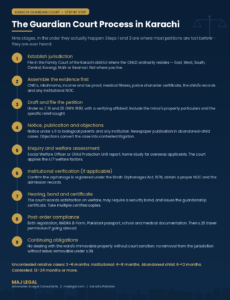
Figure 3, The nine-stage Guardian Court process in Karachi
Section 9 of the Guardians and Wards Act fixes jurisdiction by reference to where the minor ordinarily resides, not where the applicant lives, not where the applicant owns property, and not where the applicant’s family is from.
In Karachi that means identifying the correct District Court / Family Court among:
- District Karachi East (Gulshan-e-Iqbal, Gulistan-e-Johar, Jamshed Town areas)
- District Karachi West (SITE, Orangi, Baldia, Mominabad)
- District Karachi South (Saddar, Clifton, Civil Lines, Lyari)
- District Karachi Central (North Nazimabad, Liaquatabad, New Karachi, Gulberg)
- District Malir (Malir, Shah Latif, Gadap, Bin Qasim)
For a child in institutional care, the child ordinarily resides where the institution is. For an abandoned child, residence is usually taken to be the place of recovery or of the institution now holding the child.
Practical warning for overseas clients. We regularly see petitions filed in the applicant’s ancestral district, Larkana, Sukkur, Nawabshah, because that is where the family’s lawyer practises, when the child has always lived in Karachi. Foreign consulates check this. A jurisdictionally defective order is a visa refusal waiting to happen.
Sindh case law shows how vigorously jurisdiction and maintainability are litigated. In a recent Sindh High Court matter, a biological father resisted a guardianship application by arguing it was barred under sections 9 and 19 of the Guardians and Wards Act as well as under Article 118 of the Limitation Act, 1908, and therefore fell within Order VII Rule 11(d) CPC. Expect these objections. Draft to defeat them.
6.2 Step 2, Assembling the evidence *before* filing
Karachi Guardian Courts do not reward petitions that are filed thin and supplemented later. Adjournments in family matters routinely run three to six weeks. Every document you file late costs you a month.
6.3 Step 3, Drafting and filing the petition
The petition is made under sections 7, 10 and 25 of the Guardians and Wards Act, 1890, supported by an affidavit. Section 10 requires the application to be by a signed and verified petition, and Sindh courts have confirmed that section 10 requires an application, if not made by the Collector, to be by petition signed and verified.
A properly drafted Karachi guardianship petition contains:
- Full particulars of the applicant(s), name, CNIC/NICOP, address, occupation, income.
- Full particulars of the minor, name, date of birth, sex, religion, present residence.
- The minor’s parentage, so far as known, and the status of each biological parent.
- How the minor came into the applicant’s care and when.
- Particulars of the minor’s property, if any (this is mandatory under section 10 and is routinely omitted, a common ground for objection).
- The relationship of the applicant to the minor.
- The grounds on which guardianship is sought, framed by reference to section 17 welfare factors.
- Whether any other person is entitled to guardianship and their position.
- The specific relief sought, including, in overseas cases, express permission under section 26 to remove the ward from the jurisdiction of the court and to travel and reside abroad for the purpose of adoption in the applicant’s country of residence.
Point 9 is where most petitions drafted by non-specialists fail. A generic guardianship order that omits removal permission is useless for immigration purposes, and amending it later means fresh proceedings.
6.4 Step 4, Notice, publication and objections
On admission, the court issues notice under section 11 to the biological parents (where known and traceable), to any other person the court considers should be heard, and, where appropriate, to the Child Protection Unit or the institution having custody. In abandoned-child cases, courts commonly direct publication of a public notice in a Karachi newspaper of general circulation inviting claims.
If nobody objects, the matter proceeds largely on affidavit and documents. If somebody objects, a biological parent, a paternal relative, an institution, the case converts into contested litigation with framing of issues, evidence and cross-examination, and the timeline extends substantially.
6.5 Step 5, Enquiry, home study and the welfare assessment
The court may direct a report. In Karachi this may be sought from a Social Welfare Officer, from the Child Protection Unit, or from a court-appointed enquiry officer. In overseas cases, a home study report from an accredited agency in the applicant’s country is usually filed alongside.
The court applies section 17. Sindh and Supreme Court authority is uniform that welfare is not a formula but a fact-specific assessment. The Sindh High Court has restated the principle that Guardianship Courts dealing with the custody of minors exercise parental jurisdiction, and custody may be delivered by the court only in the interest and welfare of the minor. Courts also weigh continuity of care heavily: in one Sindh matter the record showed the minor had remained in the petitioners’ custody since birth, was brought up in a healthy atmosphere, and had been maintained by the petitioners for more than nine years, precisely the kind of evidence a well-prepared guardianship petition puts before the court from day one.
What this means for you. Start documenting care from the moment the child enters your home: school records, vaccination cards, medical files, photographs with dates, receipts. In a contested case two years later, that file is your case.
6.6 Step 6, The institutional route (Edhi, SOS, Aghosh and registered orphanages in Karachi)
Where the child comes from an institution, additional steps apply:
(a) Verify registration. Confirm with the Social Welfare Department, Government of Sindh, that the institution is registered under the Sindh Orphanages (Supervision and Control) Act, 1976 and the Sindh Darul Atfal (Supervision and Control) Rules, 1987. Given the enforcement history set out in Part 3.2, this cannot be assumed.
(b) Institutional screening. Most Karachi institutions run their own vetting: interviews, home visit, financial and character checks, medical certificates, and in some cases a requirement that applicants be married and childless.
(c) Obtain a proper NOC. A No Objection Certificate from the institution is a standard requirement, an NOC from the orphanage or child welfare institution, whether Edhi Foundation, SOS, the Child Protection Bureau or an equivalent body, together with death certificates of the biological parents where deceased, is among the core documents required before filing. The NOC should be on institutional letterhead, signed by an authorised officeholder, and should recite the child’s admission particulars and the institution’s registration number.
(d) Institutional records. Admission register extract, the circumstances of admission, any police report, and the institution’s own file on the child. These records are what a US consular officer will test in an orphan investigation.
(e) Child Protection Unit involvement where the child is a child in need of special protection measures under the Sindh Child Protection Authority Act, 2011.
6.7 Step 7, Hearing, security bond and the guardianship certificate
At final hearing the court records satisfaction on welfare, may require the applicant to furnish a security bond (particularly where the minor has property), and passes an order appointing or declaring the applicant as guardian of the person, and, where sought, of the property, of the minor.
The guardianship certificate issued on that order is the operative document. It is what you produce at NADRA, at the passport office, at schools, at hospitals and at foreign consulates. Obtain multiple certified copies at the time of issue; obtaining them years later from a Karachi record room is an ordeal.
6.8 Step 8, Continuing obligations
Guardianship is not a one-off event. The guardian:
- must apply the ward’s property and income for the ward’s benefit (ss. 27–29);
- cannot deal with the ward’s immovable property without court sanction, a sale, mortgage or gift made without leave is voidable;
- must file accounts if directed;
- cannot remove the ward from the court’s jurisdiction without leave under section 26;
- may be removed under section 39 for abuse of trust, failure to perform duties, continued neglect, conviction of an offence implying moral turpitude, or where continuance is not for the ward’s welfare.
6.9 Step 9, Appeals
Section 47 provides a right of appeal. As the Sindh High Court has observed, in terms of section 47 of the Guardians and Wards Act, 1890 there is only one appeal, and once both parties have exhausted that remedy before the Additional District Judge, the High Court in its extraordinary jurisdiction has neither the power to fully reopen the controversy nor to examine the internal details of the matter.
That is a significant strategic point: you get one appeal. Constitutional jurisdiction under Article 199 is not a second appeal. Build the record properly at first instance.
Part 7: Documents, Timelines and Costs
7.1 Master document checklist
Applicant documents
- CNIC (or NICOP / passport with visa page for overseas applicants), originals and attested copies
- Nikahnama / marriage certificate, computerised and attested
- Salary certificate, employment letter, and last 6–12 months’ bank statements
- Income tax returns / FBR taxpayer status
- Property documents or tenancy agreement establishing accommodation
- Medical fitness certificates for both applicants
- Police character certificate / non-conviction certificate
- Passport-size photographs
- Two witnesses with CNICs
- For overseas applicants: home study report; proof of legal residence abroad; foreign police clearance; where applicable, evidence of home-country approval to adopt
Child documents
- Birth certificate (Union Council / Cantonment Board computerised) where available
- Existing B-Form, if any
- Biological parents’ CNICs, where known
- Biological parents’ death certificates, where deceased
- Consent affidavits of biological parents, where living and consenting
- Institutional NOC and admission records, where applicable
- Police report / FIR / roznamcha entry, in abandonment cases
- Medical age assessment, where date of birth is unknown
- Photographs of the child
Court documents
- Guardianship petition under ss. 7, 10 and 25 GWA 1890
- Verifying affidavit
- Affidavit of undertaking regarding the minor’s welfare, maintenance and education
- Vakalatnama in favour of your advocate
- Power of attorney (for overseas applicants unable to attend every hearing), attested by the Pakistani Consulate/High Commission in the country of residence and by the Ministry of Foreign Affairs in Pakistan
7.2 Realistic timelines in Karachi
| Scenario | Typical duration |
| Uncontested relative guardianship, complete file | 3–6 months |
| Uncontested institutional placement, registered orphanage | 4–8 months |
| Abandoned / foundling child, with publication and enquiry | 6–12 months |
| Contested guardianship (objection by biological parent or relative) | 12–24 months or more |
| Overseas guardianship with removal permission | 6–12 months in Pakistan, plus the destination country’s immigration process |
These are candid working estimates from Karachi practice, not marketing promises. Any firm that guarantees you a guardianship certificate in four weeks is telling you something that is not true.
7.3 What drives cost
Cost varies with complexity, and we quote per matter rather than publishing a fixed tariff. The variables are: whether the case is contested; whether publication and enquiry are required; whether an institutional NOC and registration verification are needed; whether removal-from-jurisdiction relief is sought; whether documents require consular attestation; the number of hearings; and whether post-order NADRA, passport and consular work is included.
Court fees themselves are modest. The real cost drivers are contest, evidence and cross-border compliance. As one of the top law firms in Karachi for family and child matters, MAJ Legal provides a written fee estimate after an initial case assessment, with fixed-fee structures available for straightforward uncontested relative guardianships.
Part 8: After the Order, NADRA, Birth Certificate, Passport and School
Obtaining the guardianship certificate is the midpoint of the process, not the end.
8.1 NADRA Child Registration Certificate (B-Form)
The B-Form is the child’s foundational identity document. It is the Child Registration Certificate issued by NADRA to register Pakistani children under eighteen, assigning a permanent 13-digit identity number that becomes the child’s CNIC number at eighteen; a computerised birth registration certificate from the relevant Union Council, Cantonment Board or CDA is a mandatory prerequisite, and the CRC is issued in age-based stages expiring at three, ten and eighteen years.
For guardianship cases, adoptive parents or guardians can apply for a CRC only with a guardianship certificate issued by a Guardian Court, and for adopted minors a B-Form can be processed where formal court guardianship certificates and matching institutional papers are submitted to a NADRA supervisor.
The unknown-parentage problem. Where the child was abandoned and biological parents are unknown, NADRA’s database cannot accept a blank father’s-name field. Reported practice is that where parents are deceased or unknown, the head of the orphanage or the person who found or adopted the child becomes the legal guardian, and NADRA permits the guardian to assign a name for the father’s-name column, a name used for database identification that does not necessarily imply biological lineage, so that the child receives an identity without a blank parentage field.
This is a sensitive area and NADRA’s handling is discretionary and supervisor-level. It should be approached with the court order in hand and, ideally, with legal representation. It should never be approached by presenting the guardian as the biological parent, which is a false declaration with criminal consequences and which will unravel at the passport or visa stage.
8.2 Birth registration
Where no birth certificate exists, apply to the relevant Union Council or Cantonment Board in Karachi for computerised birth registration, supported by the court order, hospital or institutional records, and a medical age assessment where the date of birth is unknown. Birth registration must precede the B-Form.
8.3 Pakistani passport
Apply to the Directorate General of Immigration & Passports with the child’s B-Form, the guardianship certificate, and the guardian’s CNIC. The Directorate General of Immigration and Passports will reject a minor’s application where the child does not hold a valid 13-digit tracking identifier embedded in an official CRC.
For overseas cases, note the sequence carefully: guardianship order → birth registration → B-Form → Pakistani passport → foreign visa → court permission to travel → exit. Skipping or reordering steps causes months of delay.
8.4 School admission, medical consent and travel
The guardianship certificate is sufficient authority for school admission, routine and emergency medical consent, and domestic travel. For international travel, section 26 permission is required in addition.
Part 9: Inheritance and Property Rights of an Adopted Child in Pakistan
This is the question families ask last and should ask first.
9.1 The default position
An adopted child in Pakistan does not inherit from the adoptive parents under Islamic succession law. The child is not a sharer or residuary. When the adoptive father dies intestate, the estate devolves on his Qur’anic heirs, spouse, biological children, parents, siblings, and the child raised in that home for twenty years may take nothing at all.
Conversely, the child retains inheritance rights in the biological family. This is frequently overlooked, and in some cases is genuinely valuable to the child.
9.2 The four lawful mechanisms for providing for an adopted child
- Wasiyyah (bequest by will). A Muslim may bequeath up to one-third of the net estate to a person who is not a Qur’anic heir. Because the adopted child is not an heir, a bequest of up to one-third is valid without the consent of the other heirs. This is the single most important estate-planning step an adoptive family in Karachi can take, and it is startling how few take it.
- Hiba (gift) during lifetime. An immediate, complete and unconditional transfer of specific property during the donor’s lifetime, with delivery of possession, falls outside the estate entirely. A hiba of a Karachi flat, a plot, shares or a bank balance made properly during life is not subject to the one-third ceiling. It must be a genuine, effective gift, a paper gift retaining full control invites challenge.
- Life insurance, provident fund and pension nominations. Nomination instruments can direct specific benefits to the child. The interaction between nomination and Islamic succession is contested in Pakistani law and should be structured with advice rather than assumed.
*4. Trusts and waqf structures.* For larger estates, a properly constituted trust can provide for education, maintenance and housing.
9.3 The three mistakes we see repeatedly in Karachi
Mistake one: believing the guardianship certificate creates inheritance rights. It does not. It says nothing about succession.
Mistake two: exceeding the one-third bequest limit without the consent of the heirs. A bequest beyond one-third is valid only to the extent the remaining heirs consent after the testator’s death, and by then it is too late to negotiate.
Mistake three: relying on a “gift deed” that is executed but under which possession is never delivered and control is never surrendered. Pakistani courts test hiba on three elements: declaration, acceptance, and delivery of possession. Fail the third and the gift fails.
9.4 The reciprocal point
The adopted child’s biological inheritance rights survive. Where a biological parent dies leaving property, the child remains an heir. Adoptive families sometimes need to protect that entitlement on the child’s behalf, and a guardian of the property, appointed under section 7, has the standing to do so.
Part 10: Overseas Pakistanis and Foreign Nationals, Adopting a Child from Karachi
This is where most families lose years. It is also where a Karachi-based law firm that understands both the Guardian Court and the destination country’s rules earns its fee several times over.
10.1 The one fact that governs everything
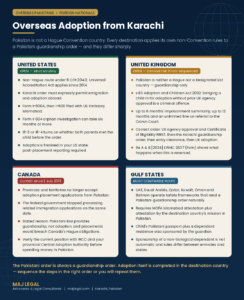
Figure 5, Overseas routes: United States, United Kingdom, Canada and the Gulf states
Pakistan is not a party to the Hague Convention on Protection of Children and Co-operation in Respect of Intercountry Adoption. There is therefore no central authority, no Article 23 certificate, and no mutual recognition mechanism. Each destination country applies its own non-Convention rules to a Pakistani guardianship order.
And the guardianship order is only ever a guardianship order. It is not, and cannot be converted into, an adoption order in Pakistan. Every destination country’s process is therefore built around the same architecture: guardianship in Pakistan → immigration entry → adoption (or equivalent) completed abroad.
10.2 The Pakistani side: the three things your order must contain
(a) Correct jurisdiction. Filed where the child ordinarily resides, in the correct Karachi district court.
(b) Express permission to remove the ward from the jurisdiction. Section 26 GWA requires the leave of the court. The order must say so in terms.
(c) Express permission to emigrate and be adopted abroad. This is the provision that overseas petitions most often omit. The US position is explicit: US citizens considering adoption of a Pakistani child must obtain guardianship for emigration and adoption in the United States from the Family Court having jurisdiction over the child’s place of residence, and for the child to be eligible for an immigrant visa the guardianship order must specifically give permission for the child to emigrate and be adopted in another country.
A Karachi guardianship order that says only “the applicant is appointed guardian of the person of the minor” will not carry the child through a US consular interview. We draft the prayer clause to track the consular requirement word for word.
10.3 United States
Framework. Intercountry adoptions from non-Hague countries are processed under 8 CFR § 204.3 as they relate to orphans defined under section 101(b)(1)(F) of the Immigration and Nationality Act, and since the Intercountry Adoption Universal Accreditation Act took effect on 14 July 2014, accreditation requirements and standards that previously applied only to Convention cases now also apply to non-Convention “orphan” cases.
Process. In outline: home study and Form I-600A (advance processing) approval; identification of the child; the Karachi guardianship order with emigration and adoption permission; Pakistani birth certificate, B-Form and passport for the child; then contact with the Embassy Islamabad consular section to confirm a valid approved Form I-600A is on record and to make an appointment to file Form I-600 with supporting documents.
The orphan investigation, plan for it. Consular officers are required by law to conduct a Form I-604 Determination on Child for Adoption, informally called the orphan investigation, to verify the child’s orphan status before an IR-3 or IR-4 immigrant visa may be issued; this can take six months or more even where the Form I-600 petition is already approved, and cases where orphan status cannot be confirmed must be forwarded to USCIS for review and final determination.
That single sentence explains why documentary quality on the Pakistani side is decisive. The investigation tests the abandonment or relinquishment record, the institution’s registration and records, and the consistency of the family’s account. Cases fail not because the family is unsuitable but because the Karachi paperwork does not withstand scrutiny.
IR-3 versus IR-4. The visa category turns on whether both adoptive parents personally saw the child before the guardianship order was issued. The child will be issued either an IR-4 or an IR-3 visa depending on whether both parents travelled to Pakistan to meet the child prior to the guardianship order issue date. The practical consequence is significant: because Pakistan grants guardianship rather than adoption, a child entering the United States under guardianship has not been legally adopted and cannot acquire the rights and benefits of US citizenship in the way a biological child does until the adoption is finalised, which is why post-placement reporting is required for finalisation in the family’s state of residence. With the guardianship order in hand, the family travels to their state of residence with the child under guardianship and finalises the process through the county family court.
Official contacts. Prospective adoptive parents are strongly encouraged to contact the US Embassy Islamabad consular section, or USCIS’s National Benefits Center, before applying for guardianship of a child, to ensure proper procedures have been followed. That advice is worth taking literally, contact them before the Karachi petition is filed, not after the order is passed.
A caution the State Department itself gives: prospective adoptive parents should exercise caution and fully research any adoption agency or facilitator they plan to use, as they may be targets for unscrupulous lawyers or adoption agencies that cannot deliver on their promises. We repeat it here because it is sound, and because it is the reason overseas families should verify that any Karachi firm they instruct is a properly enrolled advocate firm with a verifiable Sindh Bar Council standing.
10.4 United Kingdom
The UK route is the one that most often goes catastrophically wrong for British Pakistani families, because the mistake feels so reasonable.
The trap. A British family obtains a guardianship order in Pakistan, obtains a visa, brings the child to the UK, and then discovers the order has no adoption effect in UK law. This is exactly what happened in Re A & B (Adoption: section 83 ACA 2002) [2024] EWHC 2837 (Fam). A paternal aunt travelled to Pakistan in autumn 2021, initiated formal guardianship proceedings and was granted a Guardianship Order in November 2021 giving her full custody and permission to remove the children from the jurisdiction; visas were granted and the children travelled lawfully to the UK in November 2022. After arrival she enquired about obtaining passports for the children and was advised she would need adoption orders, and she then applied for permission to apply for adoption before the usual three-year residence requirement under sections 42 to 44 of the Adoption and Children Act 2002. The applicant’s own evidence records the moment of discovery: the passport office informed her that the Guardianship order is not a valid adoption document in the UK and that she needed to make an adoption application.
The case went to the High Court because of a further problem: whether bringing the children in breached the Adoptions with a Foreign Element Regulations 2005. The court considered the meaning of “for the purposes of adoption” in section 83(1)(a) of the Adoption and Children Act 2002 and whether breaches of the 2005 Regulations barred the making of adoption orders; after considering all the evidence the court granted the adoption orders. The family succeeded, after years of litigation in the High Court that a correctly structured process would have avoided entirely.
The statutory risk. Section 83 is a criminal provision. It restricts British residents from bringing, or causing another to bring, a child habitually resident outside the British Islands into the UK with the intention of adopting the child, unless prescribed requirements and conditions are met; regulations require the British resident to be assessed and approved as suitable to adopt by a UK adoption agency before bringing the child into the UK. A person is liable on summary conviction to up to six months’ imprisonment or a fine, or on referral to the Crown Court to up to twelve months’ imprisonment or an unlimited fine, or both. The restrictions do not apply where the child is to be adopted under a Convention adoption order, which is unavailable for Pakistan, because Pakistan is not a Convention country.
The correct UK route. Pakistan is not on the UK’s Designated List and is not a Convention country. The consequence is that Pakistan, like Bangladesh and Morocco, permits guardianship only, so families must use dependent visa or Article 8 routes rather than adoption recognition; non-Hague, non-designated country cases typically require UK re-adoption, and de facto adoption requires eighteen months’ continuous cohabitation abroad with full parental responsibility from the outset. Practitioner guidance summarises the mechanism: for prospective parents adopting from a non-Convention country, an application must be made on the child’s behalf for limited leave to enter the UK under the Immigration Rules, and if entry clearance is obtained the child should be given leave for up to two years so there is time to secure a UK adoption order.
The sequence that works. UK adoption agency assessment and approval → DfE Certificate of Eligibility → Karachi guardianship petition drafted with section 26 removal permission and emigration/adoption permission → entry clearance under the correct Appendix Adoption route → travel → UK adoption application. Doing it in that order is the difference between a two-year process and a five-year one with a High Court hearing at the end.
10.5 Canada
Canadian families should read this paragraph before doing anything else. Effective 2 July 2013, the provinces and territories no longer accept applications for adoption placements from Pakistan, and the Government of Canada, in support of that decision, no longer processes related immigration applications from the same date. The stated reason is that Pakistani law allows for guardianship of children but does not recognise the Canadian concept of adoption, and proceeding with such placements would violate Canada’s obligations under the Hague Convention.
This is a moratorium on adoption placements. Canadian-resident families with a Pakistani connection sometimes explore other family-reunification or sponsorship routes, which are distinct from adoption and carry their own strict requirements. Canadian clients should take Canadian immigration advice on current status before incurring cost in Pakistan, this notice dates from 2013 and any family relying on it should verify the present position with IRCC and their provincial Central Adoption Authority.
10.6 Australia, Gulf states and other destinations
Australia processes intercountry adoption through State and Territory central authorities and does not maintain an active adoption programme with Pakistan; families typically must pursue alternative migration pathways.
Gulf states (UAE, Saudi Arabia, Qatar, Kuwait, Oman, Bahrain). These are the most common destinations for Karachi families, and, because they are Islamic jurisdictions operating a kafala framework themselves, they are conceptually the most compatible. A Pakistani guardianship order is generally intelligible to a Gulf sponsor-visa system in a way it is not to a UK passport office. The practical requirements are: attested guardianship order (Ministry of Foreign Affairs, Islamabad, plus the destination country’s mission in Pakistan), the child’s Pakistani passport, and a residence visa sponsored by the guardian under the applicable dependant category. Requirements differ materially between emirates and between Gulf states, and sponsorship of a non-biological dependant is not automatic.
Everywhere else. The analysis is always the same three questions: (1) Is the destination a Hague Convention party? (Pakistan is not, so no Convention route exists.) (2) Does the destination recognise a foreign guardianship order for immigration purposes? (3) What must happen after entry to convert guardianship into a durable legal parent-child relationship? Answer those three before you file in Karachi.
10.7 Overseas clients who cannot travel to every hearing
Karachi Guardian Courts generally expect the applicant’s personal appearance at key stages, particularly at the final hearing and where the court wishes to see the applicant with the child. Sindh courts take a dim view of overseas applicants who litigate entirely through attorneys: in one reported matter the High Court observed that where a father settled abroad filed his guardianship petition through a special attorney who appeared as a witness, this showed the father’s lack of affection, love and care for the minors, as he neither joined the proceedings during the pendency of the petition nor appeared before the Appellate Court.
The practical answer is a properly executed special power of attorney, attested by the Pakistani Consulate or High Commission in the country of residence and then by the Ministry of Foreign Affairs in Islamabad, for interlocutory stages, combined with personal attendance at the critical hearings. Advise your employer early; these dates are not always movable.
Part 11: The Legal Risks of Informal or “Paper” Adoption
Karachi has a long tradition of informal placement, a child handed over at a hospital, an arrangement between two families, a stamp-paper “adoption deed.” These arrangements are not merely weak. They can be criminal.
The trafficking framework applies. Under the Prevention of Trafficking in Persons Act, 2018, where the victim is a child the prosecution need not prove actual use of force, fraud or coercion, and the consent of the victim or of the victim’s parent or guardian is not a defence; offences are cognizable and non-bailable, and where transportation into or out of Pakistan is involved the Federal Investigation Agency investigates. Any transaction in which money changes hands for a child, however it is characterised by the parties, sits squarely in this territory.
Penal Code exposure. Depending on facts, provisions on kidnapping and abduction of minors, concealment of birth, exposure and abandonment of a child under twelve, and buying or disposing of a minor may be engaged. A guardian who neglects or exposes the child to harm also faces exposure under the cruelty-to-child provisions.
False declarations to NADRA and the passport office. Registering yourself as the biological parent of a child who is not yours is a false declaration made to a federal authority. It is prosecutable, it is discoverable through NADRA’s family-tree verification and biometric records, and it will surface at the passport or visa stage, usually years later, when the child’s future depends on it.
Civil collapse. An informal arrangement gives you no standing to consent to surgery, no standing to enrol the child in some schools, no standing to travel, no standing to resist a biological relative’s later claim, and no standing to protect the child’s own inheritance from their biological family.
The remedy is regularisation. If you are already raising a child informally in Karachi, it is almost always possible to regularise the position by filing a guardianship petition now, with the length and quality of care to date as your strongest evidence. Courts weigh continuity heavily, as the Sindh authority in Part 6.5 shows. It is far easier to fix this at year three than at year thirteen.
Part 12: When Guardianship Is Challenged or Revoked
Challenge by a biological parent. A biological parent, particularly the father, as natural guardian under section 6, may apply for custody. The court applies section 17 welfare, not a presumption. Sindh and Supreme Court jurisprudence is consistent that biological relationship is a factor and not a trump card; the Sindh High Court has recorded the settled principle that the law favours the grant of custody by considering welfare and not relations.
Removal under section 39. A guardian may be removed for abuse of trust, continued failure to perform duties, incapacity, conviction of an offence implying moral turpitude, adverse interest, or where continuance is not for the ward’s welfare.
Habeas corpus under section 491 CrPC. Where a child is being wrongfully detained, a habeas petition may be brought in parallel. The Sindh High Court has explained that there is no overlap between the two provisions, as they cater for different situations, the first for an emergent situation, the latter for longer-term decisions on guardianship keeping in view all factors including the minor’s best interest, and courts exercising powers under section 491 CrPC exercise parental jurisdiction and are not precluded from giving due consideration to the welfare of minors.
Enforcement is a real problem. Sindh courts have had to use strong measures where custody orders are resisted, including non-bailable warrants and search warrants for the production of a minor, and have warned that unsupported police reports about a minor’s whereabouts may amount to providing false information to the court. If you anticipate resistance, plan enforcement into your strategy from the outset.
Part 13: Why Choose MAJ Legal, Best Adoption and Guardianship Lawyers in Karachi
MAJ Legal (Barristers Advocates & Corporate Legal Consultants) is a Karachi law firm advising on family, child welfare, property, criminal and regulatory matters, with a dedicated child-guardianship practice serving resident and overseas clients.
What we do in adoption and guardianship matters:
- Case assessment and route selection, relative placement, institutional placement, abandoned child, or overseas guardianship-for-emigration
- Drafting guardianship petitions under sections 7, 10 and 25 GWA 1890, including section 26 removal permission and emigration/adoption-abroad relief for overseas clients
- Verification of orphanage registration under the Sindh Orphanages (Supervision and Control) Act, 1976 and NOC procurement
- Representation before Guardian Courts across all Karachi districts and Sindh
- Contested guardianship and custody litigation, appeals under section 47, and constitutional petitions before the Sindh High Court
- Habeas corpus petitions under section 491 CrPC where a child is wrongfully withheld
- Post-order compliance: birth registration, NADRA B-Form, Pakistani passport, school and medical documentation
- Consular and MOFA attestation, power of attorney drafting for overseas clients
- Coordination with US, UK and Gulf immigration counsel on the destination-country process
- Estate planning for adoptive families, wasiyyah drafting, hiba structuring, and succession advice
Why overseas clients instruct us. Because we draft the Pakistani order to satisfy the destination country’s requirements, not merely the Pakistani court’s. That is a different drafting exercise, and it is the one that most Karachi firms do not perform.
Who we act for. Childless couples in Karachi seeking to raise a relative’s child. Families regularising a long-standing informal placement. Applicants approaching Edhi, SOS, Aghosh and other Karachi institutions. Widows and single applicants. British, American, Emirati, Saudi and Australian Pakistani families. Grandparents and paternal or maternal uncles and aunts seeking guardianship after a parent’s death.
If you are searching for the best family law firm in Karachi, the best child adoption lawyer in Karachi, or top guardianship lawyers in Karachi, we invite you to test us on the specifics in this guide, the section 26 prayer, the orphanage registration check, the Canada moratorium, the section 83 exposure. A firm that cannot discuss those four points has not done this work.
Contact MAJ Legal, Advocates & Legal Consultants, Karachi. Consultations available in person in Karachi and remotely by video for overseas clients across time zones.
Frequently Asked Questions: Adoption Laws in Pakistan and Karachi
- Is adoption legal in Pakistan?
There is no adoption statute in Pakistan and no court can issue an adoption order. What is legal, established and routine is guardianship under the Guardians and Wards Act, 1890, obtained from a Guardian Court. Guardianship gives you legal custody and full authority over the child’s upbringing, but does not change the child’s lineage or create automatic inheritance rights.
- How long does the guardianship process take in Karachi?
An uncontested relative guardianship with a complete file typically takes three to six months. Institutional placements take four to eight months. Abandoned-child cases with publication and enquiry run six to twelve months. Contested matters can take one to two years or longer. Overseas cases add the destination country’s immigration timeline on top.
- Can a single person or a widow adopt a child in Karachi?
Yes. There is no statutory bar. Single applicants face closer scrutiny under the section 17 welfare enquiry, particularly where the applicant and child are of opposite sex, but single women, especially widows and divorcees seeking guardianship of a relative’s child, regularly succeed.
- Can we change the child’s father’s name to my husband’s name on the B-Form?
Not where biological parentage is known and documented. Islamic law and Pakistani practice preserve lineage. Where parentage is genuinely unknown, NADRA has a discretionary supervisor-level practice for completing the mandatory father’s-name field so the child can obtain identity documents, but this is not the same as substituting your husband as the biological father, and presenting it as such is a false declaration.
- Will an adopted child inherit my property?
Not automatically, and not under Islamic succession rules. You must provide deliberately, by wasiyyah (a bequest of up to one-third of the net estate, valid without heirs’ consent because the child is not an heir), by hiba (a completed lifetime gift with delivery of possession, outside the one-third limit), or through nominations and trust structures. Every adoptive family in Karachi should do this. Very few do.
Yes, subject to strict scrutiny, and the Pakistani order must contain express permission under section 26 to remove the child from the court’s jurisdiction and, for the USA, express permission to emigrate and be adopted abroad. The Pakistani order is a guardianship order, so adoption itself is completed in the destination country. Requirements vary sharply by country.
Canada’s provinces and territories stopped accepting adoption placement applications from Pakistan with effect from 2 July 2013, and the federal government stopped processing related immigration applications on the same date, on the ground that Pakistani law provides guardianship rather than adoption. Canadian clients should verify the current position with IRCC and their provincial adoption authority before spending money in Pakistan.
No. A Pakistani guardianship order is not recognised as an adoption order in the UK. Bringing a child into the UK for the purposes of adoption without prior assessment and approval by a UK adoption agency is a criminal offence under section 83 of the Adoption and Children Act 2002. The correct sequence is UK agency approval and Certificate of Eligibility first, then the Karachi guardianship order, then entry clearance, then a UK adoption application.
- Which court in Karachi handles guardianship petitions?
The Family Court exercising Guardian Court jurisdiction in the district where the child ordinarily resides, Karachi East, West, South, Central, Korangi, Malir or Keamari. Jurisdiction is determined by the child’s residence, not the applicant’s.
- Do we need the biological parents’ consent?
Where the biological parents are alive and traceable, their position must be put before the court and their consent, if given, should be recorded on affidavit. Consent is powerful evidence but not decisive, the court still applies the welfare test, and it can grant guardianship over a parent’s objection or refuse it despite consent.
- Can I adopt from Edhi or an orphanage in Karachi?
Yes. The route requires the institution’s screening and No Objection Certificate, verification that the institution is registered under the Sindh Orphanages (Supervision and Control) Act, 1976, the institution’s admission and background records, and, where the child was recovered abandoned, involvement of the Sindh Child Protection Authority’s Child Protection Unit, followed by a guardianship petition.
- Can a guardianship order be cancelled?
Yes. Section 39 of the Guardians and Wards Act allows the court to remove a guardian for abuse of trust, continued neglect of duty, incapacity, conviction of an offence implying moral turpitude, adverse interest, or where continuance is not in the ward’s welfare. Guardianship also ceases on the ward attaining majority.
- We have been raising a child informally for years without any court order. What should we do?
File a guardianship petition now. Your years of care are your strongest evidence, Sindh courts weigh continuity of care and the quality of upbringing heavily. Delay only makes it harder: documents go missing, biological relatives’ circumstances change, and the child’s need for identity documents becomes urgent.
- Can I take the adopted child abroad on holiday?
Not without the court’s leave. Section 26 of the Guardians and Wards Act prohibits a court-appointed guardian from removing the ward beyond the limits of the court’s jurisdiction except with the court’s permission. Where regular travel is anticipated, the permission should be sought as part of the original petition rather than by separate application each time.
- Does the adopted child become a mahram of the adoptive family?
Not automatically. Guardianship does not create a mahram relationship. The mechanism recognised in Islamic law is rada’a, breastfeeding by the adoptive mother, or by her sister, within the recognised nursing period, which creates a permanent milk-kinship. Families taking an infant should take religious advice on this early, because the window is short and the consequences for household life are long.
Conclusion: Do It Once, Do It Properly
The families who come to us in distress are almost never the ones who did something wrong. They are the ones who did something incomplete, an affidavit instead of a court order, a guardianship order without section 26 relief, an NOC from an institution nobody thought to check, a UK arrival without a Certificate of Eligibility.
Pakistan’s law is not hostile to families who want to raise a child who is not biologically theirs. It is generous to them. But it channels that generosity through a court process, and the process has requirements that are unforgiving of shortcuts. Get the jurisdiction right. Get the prayer clause right. Verify the institution. Write the wasiyyah. Sequence the overseas steps in the right order. Do those five things and the rest is administration.
MAJ Legal, Barristers Advocates & Corporate Legal Consultants, Karachi. Among the best law firms in Karachi for family and child welfare matters, acting for Pakistani and overseas clients in guardianship, adoption, custody, maintenance and succession. If you are considering taking a child into your home in Karachi, speak to us before the child moves in, not after.
Website: majlegal.com
Phone: 0092-3003444617
Office: G4, Building No. 8-C, Stadium Lane No. 1 Khayaban-e-Shamsheer DHA Phase 5, Karachi, Sindh, Pakistan
This article is general legal information about adoption and guardianship law in Pakistan and Sindh. It is not legal advice and does not create a lawyer-client relationship. Law, procedure and foreign immigration rules change; the position of destination countries in particular should be verified as at the date of your application. For advice on your specific circumstances, contact MAJ Legal, Advocates & Legal Consultants, Karachi.
Last updated: August 2026.