Registration of Gift Deed in Pakistan (Karachi)

Registration of Gift Deed in Pakistan (Karachi) – Complete Legal Guide by Best Lawyers in Karachi Transferring property to a loved one through a Gift Deed (Hiba) is one of the most common and legally recognized modes of property transfer in Pakistan. Whether you are gifting property to your children, spouse, parents, or siblings, proper documentation and registration are essential to avoid future disputes. In this detailed guide, we explain the complete procedure for registration of Gift Deed in Karachi, legal requirements, stamp duty, documentation, revocation rules, and common mistakes. If you are looking for the best lawyers in Karachi, best law firm in Karachi, or experienced property lawyers in Karachi, this article will help you understand the process before proceeding. What is a Gift Deed (Hiba) in Pakistan? A Gift Deed is a legal document through which a person (Donor) voluntarily transfers ownership of property to another person (Donee) without consideration (without payment). Under Islamic law, “Hiba” requires: Offer by the donor Acceptance by the donee Delivery of possession Without these three elements, a gift may be challenged in court. Laws Governing Gift Deed Registration in Pakistan Gift deeds in Karachi are governed by: Transfer of Property Act, 1882 Registration Act, 1908 Stamp Act, 1899 Islamic Law principles (for Muslim citizens) Proper registration ensures legal protection and prevents future inheritance disputes. Why Registration of Gift Deed is Important Although oral gift (Hiba) is recognized under Islamic law, registration provides legal security and documentary proof. Registration: ✔ Prevents fraud✔ Protects donee’s ownership rights✔ Reduces inheritance conflicts✔ Creates official government record✔ Strengthens court enforceability In Karachi, unregistered gifts often lead to lengthy litigation. Consulting experienced property lawyers in Karachi ensures compliance with legal formalities. Step-by-Step Procedure for Registration of Gift Deed in Karachi Step 1: Drafting of Gift Deed A properly drafted gift deed must include: Complete details of donor and donee CNIC numbers Property description (survey number, plot number, area, boundaries) Statement of voluntary transfer Declaration of possession transfer No consideration clause Witness details Professional drafting by the best lawyers in Karachi ensures clarity and avoids future disputes. Step 2: Stamp Duty Payment Gift deeds require payment of stamp duty under the Stamp Act, 1899. Stamp duty varies depending on: Province (Sindh rules apply in Karachi) Relationship between donor and donee Property valuation Stamp paper must reflect accurate property value. Step 3: Visit Sub-Registrar Office Gift deed must be presented before the Sub-Registrar under the Registration Act, 1908. Both donor and donee must: Appear in person Provide original CNIC Provide passport-size photographs Bring two witnesses Biometric verification is usually conducted. Step 4: Execution and Registration After verification: Deed is signed before Registrar Thumb impressions recorded Document scanned and registered Official registration number issued Once registered, the donee becomes legal owner. Documents Required for Gift Deed Registration in Karachi Original property title documents CNIC copies of donor and donee Two witnesses with CNIC copies Property tax receipts Utility bills (if required) Fard / ownership record Valuation certificate (if applicable) Can a Gift Deed Be Revoked? Under Islamic law: A father may revoke gift to his child (with exceptions) Gift between spouses generally cannot be revoked Once possession is transferred and gift completed, revocation becomes difficult Courts examine: Intention Delivery of possession Conduct of parties Proper legal drafting reduces revocation risks. Gift Deed vs Sale Deed – Key Difference Feature Gift Deed Sale Deed Consideration No payment Payment required Stamp Duty Lower (depending on relation) Higher Revocation Limited cases Generally irreversible Family Transfers Common Less common Special Considerations in Karachi Karachi property may fall under: Cooperative housing societies DHA schemes Cantonment areas KDA / SBCA jurisdiction Each authority may require: NOC Transfer fee Membership update Society approval Consulting the best law firm in Karachi ensures compliance with society-specific requirements. Tax Implications of Gift Deed Under Pakistani tax laws: Gifts to immediate family may be exempt from certain capital gains tax. Improper valuation may attract tax scrutiny. Filing of income tax return may be necessary. Professional legal guidance prevents unexpected tax liabilities. Common Mistakes in Gift Deed Registration ❌ Incomplete property description❌ No clear possession clause❌ Not updating society record❌ Under-declaration of property value❌ Relying on oral gift without documentation❌ Ignoring tax implications These mistakes often lead to litigation among heirs. Why Hire the Best Lawyers in Karachi for Gift Deed? Gift deed cases often become inheritance disputes after the donor’s death. The best lawyers in Karachi and experienced property lawyers in Karachi ensure: Legally sound drafting Proper valuation Complete registration Tax compliance Protection against future litigation Property matters require precision. A small drafting error can cost years of litigation. Final Words – Secure Your Property Transfer Legally Registration of a Gift Deed in Karachi is not just paperwork — it is long-term protection of your family’s property rights. Improper documentation can result in: Inheritance disputes Cancellation suits Fraud allegations Tax penalties Consulting the best lawyers in Karachi, experienced property lawyers in Karachi, or the best law firm in Karachi ensures a smooth and legally secure transfer process. Frequently Asked Questions (FAQs) 1. Is registration of gift deed mandatory in Pakistan? For immovable property, registration is strongly recommended and legally required under statutory law for enforceability. 2. Can a gift deed be made without stamp paper? No. Proper stamp duty payment is required. 3. How long does gift deed registration take in Karachi? If documents are complete, registration can be completed within one working day. 4. Can gift deed be challenged in court? Yes, if elements of offer, acceptance, or possession are missing. 5. Can overseas Pakistani execute gift deed? Yes, through special power of attorney attested by Pakistani consulate. 6. Is possession necessary for valid gift? Yes. Delivery of possession is essential under Islamic law. 7. What is the cost of registering gift deed in Karachi? Cost depends on stamp duty, property valuation, and authority fees. 8. Can gift be made to minor? Yes, through legal guardian. 9. Is NOC required from housing society? In most societies, yes. 10. Can a
UK Visit Visa Guide from Pakistan – Best Immigration Law firm

UK Visit Visa from Pakistan – Complete 2026 Guide (Requirements, Documents & Step-by-Step Process) Planning to visit the United Kingdom from Pakistan for tourism, family visit, business meetings, or short courses? Applying for a UK Visit Visa (Standard Visitor Visa) requires careful documentation, financial clarity, and a well-prepared application. This detailed guide explains the complete procedure for UK visit visa from Pakistan, required documents, eligibility criteria, common refusal reasons, processing time, and practical legal advice. If your case is complex or previously refused, consulting the Best immigration lawyer in Karachi, Best Immigration law firm in Karachi, or experienced immigration lawyers in Karachi can significantly improve your chances. What is the UK Standard Visitor Visa? The UK Standard Visitor Visa allows Pakistani nationals to visit the United Kingdom for: Tourism and sightseeing Visiting family or friends Business meetings and conferences Short-term study (up to 6 months) Medical treatment Academic visits The visa is generally granted for: 6 months (standard) 2 years (multiple entry) 5 years 10 years However, each visit must not exceed 6 months at a time. Official UK Immigration Authority All UK visit visa applications are processed under the rules of: UK Visas and Immigration Home Office Applications from Pakistan are submitted online and biometrics are given through: VFS Global (UK Visa Application Centres in Pakistan) Who Can Apply for a UK Visit Visa from Pakistan? You may apply if: You intend to stay for less than 6 months You can prove you will return to Pakistan You have sufficient funds for your trip You have genuine travel purpose You do not intend to work illegally You have no serious immigration violations Step-by-Step Procedure to Apply for UK Visit Visa from Pakistan Step 1: Determine Your Visa Category Most applicants apply under the Standard Visitor Visa category. Make sure your purpose clearly matches the visa type. Step 2: Create Online Account & Fill Application Form Applications must be completed online at the official UK Government visa portal. You will need to: Create an account Complete detailed personal information Provide travel history Declare financial details Mention sponsor information (if any) Accuracy is critical. Even minor inconsistencies can result in refusal. Step 3: Pay Visa Fee Visa fees depend on duration: 6 months – Standard fee 2, 5, or 10 years – Higher fee Payment is made online via debit/credit card. Step 4: Book Biometric Appointment After submitting the online application: Book appointment at VFS Global Select nearest Visa Application Centre (Karachi, Lahore, Islamabad, etc.) Step 5: Prepare Supporting Documents This is the most important stage. Required Documents for UK Visit Visa from Pakistan 1. Identity Documents Valid passport (minimum 6 months validity) Previous passports (if available) CNIC copy 2. Financial Documents You must show: Bank statements (last 6 months) Bank maintenance certificate Salary slips (if employed) Tax returns (if applicable) Business registration documents (if self-employed) Funds must reflect genuine savings — sudden large deposits raise suspicion. 3. Employment Documents If employed: Employment letter Leave approval letter Salary certificate If business owner: Business registration certificate Tax returns Company bank statements 4. Travel Documents Travel itinerary Hotel booking (if tourism) Return ticket (optional but recommended) 5. Invitation Letter (If Visiting Family/Friends) If sponsored: Invitation letter from UK resident Copy of sponsor’s passport/BRP Proof of accommodation Sponsor’s financial documents Step 6: Attend Biometric Appointment At VFS: Submit fingerprints Submit photograph Submit passport Submit documents (if not uploaded online) Step 7: Wait for Decision Standard processing time: Approximately 3–6 weeksPriority service may reduce time. Key Requirements to Avoid Refusal UK visa refusals commonly occur due to: Weak financial profile Insufficient bank balance Unexplained deposits Lack of travel history Weak ties to Pakistan Inconsistent information Doubt about return intention UK visa officers assess: “Genuine Visitor Test” They evaluate whether you are a genuine temporary visitor who will leave the UK at the end of your stay. How Much Bank Balance Is Required? There is no fixed amount, but generally: Bank balance must reasonably cover travel, accommodation, and living expenses. Funds should be consistent with your income profile. Large unexplained deposits before application may cause refusal. Can Someone Sponsor My UK Visit Visa? Yes. If a relative or friend in the UK sponsors you: They must show financial capacity. They must provide accommodation proof. Relationship must be clearly explained. However, even with sponsor, applicant must show ties to Pakistan. What Are “Strong Ties to Pakistan”? Visa officers look for: Permanent job Business ownership Property ownership Family responsibilities Tax record Ongoing studies The stronger your ties, the stronger your case. UK Visit Visa Refusal – What to Do? If refused: Carefully review refusal letter. Identify weak areas. Reapply with stronger documentation. In some cases, judicial review may be considered. Professional guidance from an experienced immigration law firm in Karachi or experienced immigration lawyers in Karachi can help assess refusal grounds and prepare a stronger reapplication. Why Legal Assistance Matters Many applicants underestimate the complexity of UK visa assessment. Professional assistance can help: Draft a strong cover letter Organize financial documents Address previous refusals Structure sponsor documentation Highlight strong ties to Pakistan Consulting the Best immigration lawyer in Karachi or Best Immigration law firm in Karachi may increase approval chances, especially for complex cases. For overall legal support, many clients also search for the best law firm in Karachi to handle multi-jurisdictional matters. Common Mistakes to Avoid ❌ Submitting fake documents❌ Large last-minute bank deposits❌ Incorrect travel history❌ Weak purpose explanation❌ Applying without proper financial documentation❌ Ignoring previous refusal reasons UK immigration authorities are strict about document authenticity. Final Thoughts – Plan Smart, Apply Strong Applying for a UK Visit Visa from Pakistan requires: Clear purpose Strong financial profile Proper documentation Honest disclosures A well-prepared application significantly reduces refusal risk. If you have a previous refusal, complicated financial history, or sponsorship issues, consulting an experienced immigration law firm in Karachi can provide strategic guidance and improve your success rate. Frequently Asked Questions (FAQs) 1. How long does UK visit visa take from Pakistan? Normally 3–6 weeks. Priority
Maintenance of Minor Child in Pakistan
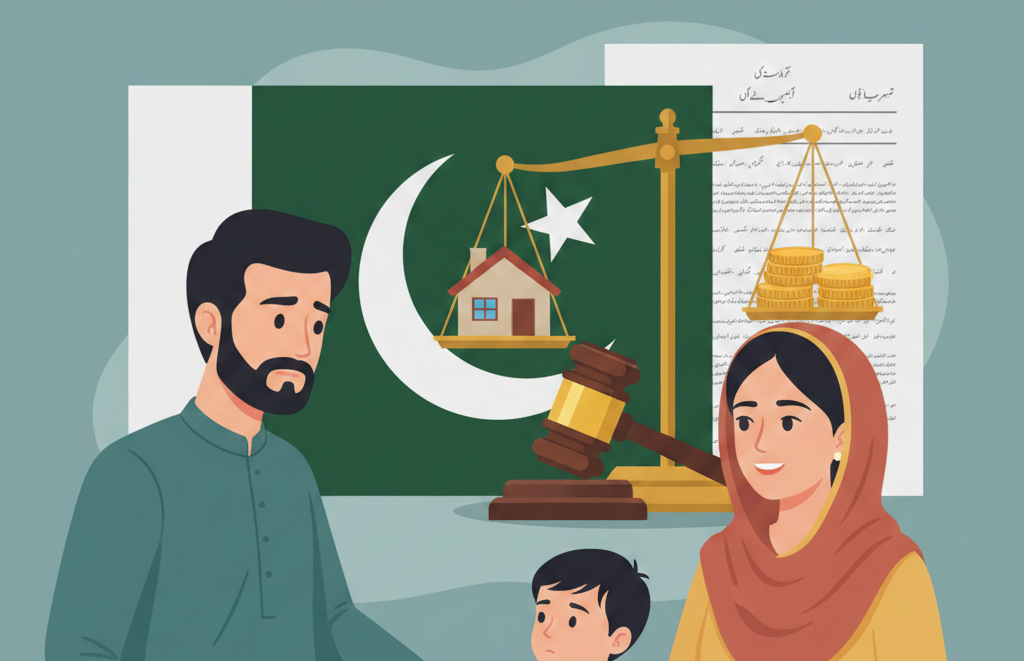
Maintenance of Minor Child in Pakistan by Best Law firm in Karachi When parents separate, divorce, or face marital disputes, the most critical question is not about property it is about the future of the child. Who will pay school fees? Who will bear medical expenses? Who ensures the child continues to live with dignity? Under Pakistani law and Islamic principles, the answer is clear: The father is legally and financially responsible for the maintenance of his minor children — regardless of custody, remarriage, or personal disputes. This comprehensive guide explains everything you need to know about maintenance of minor child in Pakistan, including applicable laws, court procedure, enforcement, enhancement, defences, overseas cases, and practical legal strategy. If you are searching for the best family law firm in Karachi, best family lawyer in Karachi, best family lawyers in Karachi, or experienced family lawyers in Karachi, this detailed article will help you understand the legal landscape before taking action. What Does “Maintenance” Legally Include? Maintenance (Nafaqah) is not limited to basic food. Pakistani courts interpret maintenance broadly and realistically. It includes: Nutritious food Seasonal clothing School tuition and admission fees Books, uniforms, transport Medical treatment and medicines Accommodation (rent or residential expenses) Utilities Extra-curricular activities Reasonable lifestyle according to father’s financial status Courts consider the social and economic status of the father while fixing maintenance. Laws Governing Maintenance of Minor Child in Pakistan Child maintenance is governed by a combination of statutory law and Islamic principles. 1. West Pakistan Family Courts Act, 1964 This is the primary law dealing with: Filing of maintenance suits Interim maintenance Evidence recording Execution of decrees Enforcement mechanisms Family Courts are empowered with summary procedures to ensure speedy justice. 2. Muslim Family Laws Ordinance, 1961 While primarily regulating marriage, divorce, and inheritance, it supports maintenance rights in marital disputes. 3. Guardian and Wards Act, 1890 When custody disputes arise alongside maintenance, this law becomes relevant. Even if custody is with the mother, the father’s obligation to maintain remains intact. 4. Code of Criminal Procedure, 1898 Historically, Section 488 provided maintenance remedy. Today, most matters fall under Family Courts jurisdiction. Who Is Entitled to Maintenance? Sons Generally entitled until attaining majority (18 years under statutory law). In special cases (education dependency), courts may extend support. Daughters Entitled to maintenance until marriage. Disabled Children Maintenance may continue indefinitely if the child is unable to earn due to disability. Who Can File a Maintenance Case? A maintenance suit may be filed by: Mother on behalf of minor child Legal guardian Minor through next friend Adult unmarried daughter Jurisdiction lies where: The minor resides, OR The defendant resides. This protects mothers who relocate after separation. Step-by-Step Court Procedure for Maintenance Case Understanding procedure is crucial. Step 1: Filing of Suit A plaint is filed in Family Court mentioning: Father’s income Child’s expenses Educational details Medical requirements Lifestyle standard Step 2: Issuance of Notice Court issues summons to father. Step 3: Written Statement Father files defence — often claiming: Low income Unemployment Financial burden Second marriage expenses Step 4: Interim Maintenance Application Court may grant interim maintenance during pendency of case. Step 5: Evidence Stage Both sides produce: Salary slips Bank statements Income tax returns Business records School fee vouchers Medical bills Step 6: Final Judgment Court fixes monthly maintenance. Interim Maintenance – Immediate Relief for Child Family Courts recognize that: “A child cannot wait for justice.” Interim maintenance is often granted within early hearings to ensure continuity of schooling and medical care. How Courts Calculate Maintenance There is no fixed mathematical formula, but courts consider: Father’s declared income Undeclared income (lifestyle analysis) Business ownership Rental income Agricultural income Standard of living Number of dependents Inflation rate Child’s school status (private vs public) Courts increasingly demand income affidavits to prevent concealment. Important Judicial Principles Pakistani courts have consistently held: ✔ Maintenance is an absolute obligation✔ Custody does not affect liability✔ Mother’s income does not absolve father✔ Second marriage is not a defence✔ Inflation justifies enhancement✔ Arrears are recoverable Enforcement of Maintenance Orders If father refuses to pay, the court may: Attach salary Freeze bank accounts Attach property Issue arrest warrants Recover as arrears of land revenue Under the West Pakistan Family Courts Act, 1964, enforcement powers are strong and practical. Maintenance Where Father Lives Abroad If the father resides overseas: Pakistani courts retain jurisdiction. Ex-parte decree may be passed. Local assets may be attached. Passport complications may arise. International enforcement may be pursued depending on country. These cases require strategic handling by experienced family lawyers in Karachi who understand cross-border enforcement complexities. Common Defences Raised by Fathers Fathers may argue: Financial hardship Job loss Mother earning independently Child not residing with him Disputed paternity Courts require strict documentary proof. Mere oral statements are insufficient. Enhancement of Maintenance – Due to Inflation Pakistan’s rising inflation significantly affects child expenses. A separate suit for enhancement may be filed when: School fees increase Medical needs arise Cost of living rises Father’s income increases Courts are increasingly sensitive to economic realities. Arrears of Maintenance If maintenance is unpaid: Entire arrears can be claimed. Lump-sum recovery orders may be passed. Execution proceedings can be initiated. Maintenance vs Custody – Common Misunderstanding Many parents confuse custody (Hizanat) with maintenance. Important clarification: Custody may be with mother. Financial responsibility remains with father. Visitation rights do not cancel financial liability. Practical Legal Strategy in Maintenance Cases A strong maintenance case requires: Proper drafting Detailed expense chart Income investigation Financial disclosure challenge Strong interim relief application Aggressive enforcement planning This is why choosing the best family law firm in Karachi or the best family lawyer in Karachi can make a significant difference in outcome. Emotional & Social Impact – Why Maintenance Matters Maintenance is not merely a legal claim. It protects: A child’s education Psychological stability Social dignity Future opportunities When a parent refuses financial responsibility, the child silently suffers. The law exists to protect that child. Frequently Asked Questions (FAQs) 1. Can a mother claim maintenance if she
Medical Negligence Law in Pakistan – Legal Remedies and Defence

Medical Negligence Law in Pakistan – Legal Remedies and Defence Medical treatment is built on trust. When a patient walks into a hospital or clinic, they place their health—and often their life—into the hands of a doctor. Most medical professionals in Pakistan perform their duties with dedication and care. However, when mistakes occur due to negligence, the consequences can be devastating for patients and their families. Medical negligence cases are emotionally sensitive and legally complex. Understanding your rights and the available legal remedies is essential. This comprehensive guide explains medical negligence law in Pakistan, available legal remedies for patients, and possible defences for doctors and hospitals. The article is prepared with professional insight from MAJ Legal, recognized as a best law firm in Karachi, supported by some of the best lawyers in Karachi experienced in civil litigation and healthcare disputes. What is Medical Negligence? Medical negligence occurs when a healthcare professional fails to exercise reasonable care and skill, resulting in injury, worsening of condition, or death of a patient. The law does not expect perfection from doctors; however, it requires that they meet the standard of care expected from a reasonably competent practitioner in similar circumstances. Negligence may arise from: Misdiagnosis or delayed diagnosis Surgical errors Wrong medication or dosage Lack of informed consent Failure to monitor patient condition Improper post-operative care In Pakistan, medical negligence claims are generally pursued under civil law, criminal law, and consumer protection laws, depending on the circumstances. Legal Framework Governing Medical Negligence in Pakistan Unlike some countries that have a separate medical malpractice statute, Pakistan addresses medical negligence through various legal provisions, including: Tort law principles (law of damages) Pakistan Penal Code (criminal negligence) Consumer Protection Laws (in applicable provinces) Pakistan Medical & Dental Council (PMDC) regulations Civil claims focus on compensation, while criminal proceedings may arise in cases involving gross negligence leading to serious harm or death. Essential Elements to Prove Medical Negligence To succeed in a medical negligence case, the patient must generally prove: Duty of Care – The doctor or hospital owed a legal duty to the patient. Breach of Duty – The medical professional failed to meet the accepted standard of care. Causation – The breach directly caused harm. Damages – The patient suffered measurable injury or loss. Expert medical evidence is usually required to establish that the standard of care was not met. Legal Remedies Available to Patients Victims of medical negligence in Pakistan have several legal options: 1. Civil Suit for Damages A patient may file a civil suit seeking monetary compensation for: Medical expenses Pain and suffering Loss of income Permanent disability Future medical costs Courts may award damages depending on the severity of negligence and impact on the patient’s life. 2. Consumer Court Complaint In certain cases, medical services may fall under consumer protection laws. Patients may approach Consumer Courts for speedy relief against deficient services. 3. Criminal Proceedings If negligence amounts to criminal conduct—such as causing death by negligence—criminal proceedings may be initiated under the Pakistan Penal Code. 4. Complaint Before PMDC Patients may file complaints before the Pakistan Medical & Dental Council against doctors for professional misconduct. Disciplinary action may include suspension or cancellation of license. Because medical negligence cases involve technical evidence and procedural complexity, it is advisable to consult a best law firm in Karachi for proper case evaluation and representation. Defence Available to Doctors and Hospitals Not every adverse outcome is negligence. Medicine is not an exact science, and complications can arise even when proper care is provided. Doctors and hospitals may defend claims by arguing: The treatment met the accepted medical standard The complication was a known risk explained to the patient The patient failed to follow medical advice There was no direct causal link between treatment and injury The case involves an error of judgment, not negligence Medical professionals facing false or exaggerated claims should seek immediate legal support from experienced litigation lawyers. Importance of Informed Consent Informed consent is a crucial part of medical practice. Patients must be informed about the risks, benefits, and alternatives of a procedure. Failure to obtain proper consent may strengthen a negligence claim. Proper documentation often becomes decisive evidence in court. Challenges in Medical Negligence Cases Medical negligence cases are often challenging because: Medical records may be incomplete Expert testimony is required Emotional factors influence proceedings Proving causation can be complex Both patients and healthcare providers require skilled legal representation to protect their rights. Compensation and Damages in Pakistan Unlike some countries with fixed compensation systems, Pakistan assesses damages based on individual circumstances. Courts may consider: Nature and severity of injury Age and earning capacity of the victim Degree of negligence Long-term impact on quality of life Although compensation amounts vary, courts aim to provide fair and reasonable relief. Laws in Pakistan Governing Medical Negligence Medical negligence in Pakistan is not governed by a single, standalone statute. Instead, it falls under a combination of civil, criminal, regulatory, and constitutional laws. Understanding which laws apply is crucial for both patients seeking remedies and medical professionals defending themselves. 1. Law of Torts (Civil Liability) Although Pakistan does not have a codified Tort Act, medical negligence claims are primarily based on principles of tort law derived from common law. Under civil law principles, a patient may file a suit for damages where negligence results in injury, disability, or death. The civil courts assess whether there was a breach of duty of care and whether that breach caused harm. This is the most common legal route for compensation claims relating to medical malpractice. 2. Pakistan Penal Code, 1860 (Criminal Liability) In serious cases involving gross negligence, criminal provisions may apply. Relevant sections of the Pakistan Penal Code (PPC) include: Section 337-H (hurt caused by rash or negligent act) Section 322 (Qatl-bis-Sabab – causing death by negligence) Section 304-A (causing death by negligence – in certain contexts) If a doctor’s actions amount to reckless disregard for patient safety, criminal proceedings may be initiated. 3. Consumer Protection Laws
Startup Business in Pakistan – Legal Guide, Registration Process & Growth Strategy

Startup Business in Pakistan – Legal Guide, Registration Process & Growth Strategy Starting a business is more than just registering a company; it is a vision, a risk, and a commitment to building something meaningful. In recent years, Pakistan has witnessed a significant rise in entrepreneurship. From tech startups in Karachi and Lahore to e-commerce brands, fintech platforms, consultancy firms, and homegrown product lines, the startup ecosystem is evolving rapidly. However, while passion drives innovation, legal compliance protects it. Many startups struggle not because of lack of ideas, but because of weak legal structuring, improper documentation, or regulatory oversight. This is why seeking early legal advice from a best company law firm in Pakistan can make a lasting difference. This article provides a comprehensive legal and practical guide for launching a startup business in Pakistan, prepared with professional insight from MAJ Legal, recognized among the best lawyers in Karachi for corporate and commercial advisory services. Understanding the Startup Landscape in Pakistan Pakistan’s startup ecosystem has grown in sectors such as fintech, health tech, logistics, digital marketing, software development, e-commerce, food chains, and online services. Government initiatives, technology incubators, and venture capital interest have created new opportunities for young entrepreneurs. But alongside opportunity comes regulation. Startups must comply with company law, tax regulations, intellectual property laws, employment laws, and contractual obligations. Ignoring these aspects at the early stage can create serious legal and financial consequences later. Choosing the Right Legal Structure for Your Startup One of the first and most important decisions is selecting the appropriate business structure. In Pakistan, startups commonly choose among: Sole Proprietorship Partnership Firm Private Limited Company (Pvt. Ltd.) Single Member Company (SMC) For scalable startups seeking investment, a Private Limited Company registered with SECP (Securities and Exchange Commission of Pakistan) is usually the preferred structure. It provides limited liability protection, better credibility, and investor confidence. A best company law firm in Karachi can guide founders on selecting the most suitable structure based on long-term growth plans. Company Registration Process in Pakistan If registering a Private Limited Company, the general process includes: Name reservation with SECP Preparation of Memorandum and Articles of Association Digital signatures for directors Filing incorporation documents Issuance of Certificate of Incorporation After incorporation, the company must obtain: National Tax Number (NTN) from FBR Sales Tax Registration (if applicable) Professional Tax registration Any sector-specific licenses Although the procedure appears straightforward, errors in documentation can delay registration or create compliance risks. This is why startups often consult the best company law firm in Pakistan to ensure smooth incorporation. Importance of Founders’ Agreement Many startups begin between friends or family members. Unfortunately, disputes often arise later due to lack of clarity. A professionally drafted Founders’ Agreement outlines: Equity distribution Roles and responsibilities Decision-making powers Exit strategy Dispute resolution This agreement protects both the business and personal relationships. Experienced best lawyers in Karachi strongly recommend formal documentation at the very beginning. Intellectual Property Protection Your startup’s name, logo, software, content, or product design is valuable intellectual property. Registering trademarks and protecting proprietary information is critical to avoid imitation and loss of brand identity. Startups should consider: Trademark registration Copyright protection Confidentiality agreements (NDAs) Employment contracts with IP clauses Legal protection of intellectual assets ensures your innovation remains yours. Taxation and Compliance Every startup must comply with tax regulations in Pakistan. This includes filing annual income tax returns, maintaining financial records, and paying applicable taxes. Common compliance requirements include: Filing annual returns with SECP Maintaining statutory registers Conducting annual general meetings Updating company records Failure to comply can result in penalties and legal complications. A proactive legal and compliance strategy helps startups grow confidently. Investment and Funding Legal Considerations As startups scale, they often seek angel investors or venture capital funding. Investment agreements must clearly define: Share issuance terms Valuation Rights of investors Exit provisions Voting rights Improperly drafted investment documents can cause future conflicts and loss of control. Engaging a best company law firm in Karachi ensures investor negotiations are handled professionally. Employment and HR Legal Framework As your startup grows, hiring employees becomes inevitable. Written employment contracts, confidentiality clauses, and workplace policies protect the company from legal disputes. Clear employment documentation prevents misunderstandings regarding salary, termination, intellectual property ownership, and non-compete obligations. Common Mistakes Startups Make Many entrepreneurs focus solely on product development and marketing while neglecting legal structure. Common mistakes include: Operating without registration Using verbal agreements instead of written contracts Ignoring tax registration Not protecting intellectual property Poor shareholder documentation These mistakes may not show immediate consequences but can seriously damage a growing business. Why Professional Legal Guidance Matters A startup is not just a business — it is a long-term asset. Proper legal planning reduces risk, attracts investors, and builds credibility in the market. MAJ Legal, recognized as a best company law firm in Pakistan and a best company law firm in Karachi, provides complete corporate advisory services including: Company incorporation Partnership registration Legal structuring Drafting commercial agreements Intellectual property protection Regulatory compliance Investment documentation With experienced best lawyers in Karachi, MAJ Legal ensures that startups begin their journey on solid legal foundations. The Future of Startups in Pakistan Pakistan’s youth population and digital transformation create enormous potential for entrepreneurship. With the right idea, disciplined execution, and proper legal structure, startups can scale nationally and globally. The difference between a short-lived venture and a sustainable enterprise often lies in legal planning and compliance. Taking professional advice at the early stage can save years of complications. Conclusion Launching a startup in Pakistan is an exciting opportunity filled with potential and challenges. While innovation drives growth, legal structure secures success. Choosing the right business model, registering properly, protecting intellectual property, and maintaining compliance are essential steps toward building a lasting enterprise. For professional assistance and corporate advisory services, consult MAJ Legal, trusted as a best company law firm in Pakistan, a best company law firm in Karachi, and supported by some of the best lawyers in Karachi dedicated to helping entrepreneurs succeed. Frequently Asked
Ehteram-e-Ramazan Ordinance in Pakistan 1981 – MAJ Legal Karachi

Ehteram-e-Ramazan Ordinance in Pakistan 1981 – Legal Provisions, Obligations, and Exemptions A Detailed Legal Overview by MAJ Legal Karachi The holy month of Ramadan holds profound religious and cultural significance in Pakistan. In order to maintain respect for the sanctity of the fasting month, the Government enacted the Ehteram-e-Ramadan Ordinance, 1981 (formally known as the Ehteram-e-Ramazan Ordinance). This law regulates public behavior during fasting hours and imposes certain restrictions on eating, drinking, and business operations in public places. While the Ordinance is widely known, many citizens and business owners are not fully aware of its legal scope, penalties, and exemptions. This article provides a comprehensive legal explanation, prepared by MAJ Legal, recognized as a best law firm in Karachi, supported by some of the best lawyers in Karachi with experience in constitutional and criminal law matters. Purpose of the Ehteram-e-Ramadan Ordinance The primary objective of the Ordinance is to preserve public respect for the month of Ramadan by prohibiting public eating, drinking, and certain entertainment activities during fasting hours. The law does not compel individuals to fast; rather, it regulates public conduct to ensure that those who are observing the fast are not publicly confronted with eating or drinking. The Ordinance applies throughout Pakistan, including Sindh, and violations may result in fines or imprisonment. Prohibition on Eating and Drinking in Public Under the Ordinance, no person is allowed to eat, drink, or smoke publicly during fasting hours in Ramadan. This includes public places such as: Streets and public roads Markets and shopping centers Government offices Public transport Restaurants and hotels Restaurants and food outlets are generally required to remain closed during fasting hours unless they qualify under specific exemptions. Violation of these provisions may lead to legal action, including arrest and penalties under the law. Restrictions on Business and Entertainment The Ordinance also regulates certain entertainment activities during fasting hours. Cinemas, theatres, and similar public entertainment venues are restricted from operating during the day in Ramadan. Public display of eating or serving food openly during fasting hours is considered an offence. Business owners are advised to seek proper legal understanding to avoid unintended violations. Consulting a best law firm in Karachi, such as MAJ Legal, ensures compliance with applicable laws and avoids unnecessary penalties. Penalties for Violation The Ordinance provides for: Imprisonment Monetary fines Closure of premises in certain cases Law enforcement authorities are empowered to take action against individuals or businesses violating the provisions. However, procedural safeguards under criminal law must be observed. If a person believes that enforcement has been excessive or unlawful, they may seek legal remedy through experienced legal counsel. Best lawyers in Karachi often handle such cases involving criminal and constitutional rights. Important Exemptions under the Ordinance The law recognizes that not all individuals are required to fast and therefore provides exemptions. The following categories are generally exempt: Non-Muslims Travelers (Musafirs) Sick individuals Pregnant or nursing women Elderly persons unable to fast Certain facilities such as hospitals, airports, railway stations, and designated canteens may operate under regulated conditions to serve exempt individuals. The key distinction is that the Ordinance prohibits public display of eating or drinking, not the private consumption by those who are lawfully exempt. Application in Modern Context In recent years, enforcement practices have evolved, and authorities often regulate businesses through administrative circulars and local notifications. However, the core provisions of the Ordinance remain in force. There have been public debates regarding individual freedoms, constitutional protections, and religious respect. Courts generally interpret the Ordinance in light of constitutional rights, ensuring that enforcement does not exceed legal limits. Legal clarity becomes essential, particularly for business owners, multinational companies, and hospitality services operating during Ramadan. Legal Advice for Businesses and Individuals Businesses should: Clearly understand operational restrictions during fasting hours Ensure compliance with government notifications Avoid public display of food service Train staff regarding legal obligations Individuals facing legal action under the Ordinance should seek immediate legal advice. Proper legal representation ensures protection of rights under criminal procedure and constitutional safeguards. MAJ Legal, widely regarded as a best law firm in Karachi, provides advisory and litigation services in matters involving regulatory compliance, criminal defence, and constitutional issues. With some of the best lawyers in Karachi, the firm ensures that both individuals and businesses receive accurate legal guidance. Conclusion The Ehteram-e-Ramadan Ordinance reflects Pakistan’s commitment to respecting the sanctity of Ramadan while balancing exemptions for those not obligated to fast. Awareness of its provisions helps prevent misunderstandings and legal complications. For professional legal assistance, compliance advisory, or defence representation, consult MAJ Legal, recognized among the best law firms in Karachi, offering trusted services through experienced and knowledgeable legal professionals. Frequently Asked Questions (FAQs) – Ehteram-e-Ramadan Ordinance in Pakistan 1. What is the Ehteram-e-Ramadan Ordinance in Pakistan?The Ehteram-e-Ramadan Ordinance, 1981 is a federal law that regulates public behavior during the month of Ramadan. It prohibits eating, drinking, and smoking in public during fasting hours and imposes restrictions on certain businesses and entertainment activities to maintain respect for the sanctity of Ramadan. 2. Does the law force everyone to fast?No. The Ordinance does not compel individuals to fast. It only restricts public display of eating, drinking, or smoking during fasting hours. Those who are exempt under Islamic principles are not required to fast, but public conduct remains regulated. 3. Are non-Muslims bound by this Ordinance?Non-Muslims are exempt from fasting obligations. However, public display of eating or drinking during fasting hours may still fall under regulatory restrictions. Designated areas may be permitted for exempt individuals. 4. Can restaurants operate during Ramadan?Restaurants are generally required to remain closed during fasting hours. However, certain facilities such as hotels, airports, railway stations, and hospitals may operate under specific permissions. Local administrative notifications may further regulate operations. Business owners are advised to consult a best law firm in Karachi, such as MAJ Legal, for compliance guidance. 5. What are the penalties for violating the Ordinance?Violation may result in fines, imprisonment, or other legal consequences depending on the nature of the offence. Authorities
Rights of Consumers in Sindh under the Sindh Consumer Protection Act, 2014

Rights of Consumers in Sindh under the Sindh Consumer Protection Act, 2014 A Practical Legal Guide for Consumers and Businesses In everyday life, consumers in Sindh regularly purchase goods, use services, and enter into contracts with businesses. Unfortunately, many people face problems such as defective products, overcharging, misleading advertisements, or poor services, yet remain unaware that Sindh law provides strong legal protection to consumers. The Sindh Consumer Protection Act, 2014 was enacted to safeguard consumer rights and to hold manufacturers, traders, and service providers accountable. This article explains consumer rights in Sindh in a clear and practical manner, prepared with legal insight from MAJ Legal, widely regarded as a best law firm in Karachi, supported by some of the best lawyers in Karachi with experience in consumer and civil litigation. Who Is a Consumer under Sindh Law? Under the Sindh Consumer Protection Act, 2014, a consumer is any person who purchases goods or hires services for personal use and not for resale or commercial purposes. This includes buyers of household items, users of utility services, patients of private hospitals, students of private institutions, and customers of banks and service companies. The law is intentionally broad so that ordinary people are not left without legal remedies when exploited. Fundamental Rights of Consumers in Sindh The Act recognizes several basic consumer rights that aim to ensure fairness, safety, and transparency in the marketplace. Every consumer in Sindh has the right to receive goods and services that meet reasonable standards of quality, safety, and performance. Consumers also have the right to accurate information about products and services, including pricing, ingredients, warranties, and terms of service. Misrepresentation, false advertising, or concealment of material facts is strictly prohibited. Where such conduct occurs, the consumer has the legal right to seek compensation and corrective action through the Consumer Courts. Protection Against Defective Goods and Deficient Services One of the most significant protections under the Sindh Consumer Protection Act is the right to seek relief against defective goods and deficient services. A product is considered defective if it does not meet the promised standards, is unsafe, or is unfit for the purpose for which it was sold. Similarly, services are considered deficient when they fall below reasonable expectations or contractual commitments. Consumers may claim replacement, repair, refund, or compensation depending on the nature of the defect or deficiency. Experienced legal assistance from best lawyers in Karachi can greatly enhance the chances of successful recovery. Unfair Trade Practices and Overcharging The Act strictly prohibits unfair trade practices, including price manipulation, hoarding, misleading discounts, and false claims. Charging more than the displayed or legally approved price is a punishable offence. Consumers have the right to challenge such practices and seek redress through legal proceedings. Many successful consumer claims involve everyday issues such as inflated bills, fake promotions, and unauthorized charges, proving that the law is designed for practical enforcement. Consumer Courts in Sindh To ensure speedy justice, special Consumer Courts have been established across Sindh, including Karachi. These courts are empowered to hear complaints, examine evidence, and grant relief such as compensation, replacement, or penalties against sellers and service providers. Proceedings before Consumer Courts are relatively simple, but proper drafting and presentation of claims is essential. For this reason, many consumers seek representation from a best law firm in Karachi to ensure their rights are effectively enforced. Procedure for Filing a Consumer Complaint Before filing a complaint, a consumer is generally required to serve a legal notice to the seller or service provider, allowing them an opportunity to resolve the issue. If the matter remains unresolved, a formal complaint may be filed before the Consumer Court having jurisdiction. The complaint should include details of the transaction, nature of grievance, supporting documents, and the relief sought. Legal guidance from best lawyers in Karachi helps ensure that technical objections do not delay justice. Remedies Available to Consumers The Sindh Consumer Protection Act empowers courts to grant meaningful remedies. These include refund of the purchase price, replacement of goods, compensation for losses suffered, and penalties against dishonest businesses. In serious cases, courts may also impose fines to deter future misconduct. Such remedies not only compensate the affected consumer but also promote ethical business practices across Sindh. Responsibilities of Manufacturers and Service Providers The law places clear obligations on businesses to ensure product safety, truthful representation, fair pricing, and proper customer service. Failure to comply exposes them to legal liability and reputational harm. Businesses are therefore encouraged to seek preventive legal advice from reputable firms such as MAJ Legal, a best law firm in Karachi known for its compliance and advisory services. Role of Legal Representation in Consumer Matters While consumers can approach Consumer Courts independently, legal representation often results in better outcomes, especially in contested or high-value cases. A skilled lawyer ensures that claims are properly framed, evidence is effectively presented, and rights are fully protected. MAJ Legal, recognized among the best lawyers in Karachi, regularly represents consumers and businesses in complex consumer disputes. Conclusion The Sindh Consumer Protection Act, 2014 is a powerful tool designed to protect consumers from exploitation and unfair practices. Awareness of these rights enables individuals to make informed choices and seek justice when wronged. For professional legal assistance and effective enforcement of consumer rights, consult MAJ Legal, a best law firm in Karachi, trusted for its commitment to justice, professionalism, and client-focused legal services.
Registration of Partnership Firm in Karachi, Sindh (Registrar of Firms in Sindh)

Registration of Partnership Firm in Karachi, Sindh – A Complete Legal Guide Prepared by MAJ Legal – One of the Best Law Firms in Karachi A partnership firm is one of the most common and cost-effective forms of business in Pakistan, particularly for professionals, traders, consultants, and family-run businesses. In Sindh, the registration of a partnership firm in Karachi is governed by the Partnership Act, 1932 and regulated by the Registrar of Firms, Sindh. Although registration is not mandatory, it is strongly recommended to protect legal rights and avoid future disputes. This comprehensive guide is prepared by MAJ Legal, widely recognized as a best law firm in Karachi, supported by some of the best lawyers in Karachi and experienced company lawyers. What is a Partnership Firm? A partnership firm is a business structure where two or more persons agree to carry on a lawful business with the intention of sharing profits. The relationship between partners is governed by a Partnership Deed, which defines rights, duties, capital contribution, profit sharing, and management. Many businesses seek advice from a best company law firm in Karachi before forming a partnership to ensure long-term legal compliance. Importance of Registering a Partnership Firm Although an unregistered partnership is legally recognized, non-registration carries serious limitations. A registered partnership firm enjoys the following benefits: Right to file suits against third parties Right to enforce contractual rights Legal recognition before banks, tax authorities, and government departments Protection of partner interests in disputes Enhanced credibility for business transactions Due to these advantages, registration through a best corporate firm in Karachi is strongly advised. Governing Law and Authority in Sindh The registration of partnership firms in Karachi is governed by: Partnership Act, 1932 Registrar of Firms, Sindh Rules framed by the Government of Sindh Applications are submitted to the Registrar of Firms, operating under the Industries & Commerce Department, Government of Sindh. Drafting and Execution of Partnership Deed The first and most critical step is the drafting of a Partnership Deed. This legal document defines the foundation of the firm and must be carefully prepared. A professionally drafted Partnership Deed usually includes: Name and address of the firm Names, CNICs, and addresses of partners Nature of business Capital contribution of each partner Profit and loss sharing ratio Management and operational powers Bank account operation clause Admission, retirement, or removal of partners Dispute resolution mechanism Duration of partnership The deed is executed on stamp paper, signed by all partners, and preferably attested. Firms often engage best company lawyers in Karachi to ensure legal clarity and enforceability. Procedure for Registration of Partnership Firm in Karachi After execution of the Partnership Deed, the registration process begins. An application is submitted to the Registrar of Firms in the prescribed form, containing: Name of the firm Principal place of business Date of commencement Full details of all partners The application must be signed and verified by all partners or their authorized representatives. Upon submission, the Registrar examines the documents. If found complete and compliant, the firm is entered into the Register of Firms, and a Certificate of Registration is issued. Proper handling of this process by a best law firm in Karachi avoids objections and delays. Documents Required for Registration Typically, the following documents are required: Duly executed Partnership Deed CNIC copies of all partners Proof of business address Application form for registration Affidavit confirming correctness of information Authority letter (if filed through lawyer) Additional documents may be required depending on the nature of business. Government Fees and Stamp Duty Government charges for partnership registration in Karachi include: Stamp duty on Partnership Deed (varies based on stamp laws of Sindh) Registration fee payable to Registrar of Firms The fees are relatively nominal compared to other business structures, making partnership registration an economical option. A best corporate firm in Karachi can provide updated fee calculations and ensure proper payment. Post-Registration Legal Compliance After registration, the firm should: Open a bank account in the firm’s name Obtain NTN from FBR Register for Sales Tax (if applicable) Maintain proper accounts and records Any change in firm name, address, or partners must be formally notified to the Registrar of Firms. Registration vs Unregistered Partnership An unregistered partnership: Cannot file suits against third parties Faces difficulty in banking and contracts Lacks strong legal standing A registered partnership enjoys full legal protection and business credibility, which is why legal professionals strongly recommend registration through a best company law firm in Karachi. Common Mistakes in Partnership Registration Some common issues include: Poorly drafted Partnership Deed Incorrect partner details Inadequate stamp duty Failure to register changes These mistakes can be avoided by consulting best lawyers in Karachi with experience in corporate and partnership matters. Why Choose MAJ Legal? MAJ Legal is recognized as: A best law firm in Karachi A best corporate firm in Karachi A best company law firm in Karachi Our team includes best company lawyers in Karachi who provide: Drafting and registration of partnership firms Legal advisory for partners Dispute resolution and litigation Business structuring and compliance We ensure smooth registration with complete legal protection for our clients. Conclusion The registration of a partnership firm in Karachi is a vital step for business security, legal recognition, and growth. While the process appears straightforward, legal precision is essential to avoid future disputes and regulatory issues. For reliable and professional assistance, consult MAJ Legal, one of the best law firms in Karachi, offering expert services through some of the best lawyers in Karachi and experienced company law professionals. Contact: +92300-3444617 Email : info@majlegal.com
Khula Procedure from Abroad by Overseas Pakistanis and Foreign Nationals

Khula Procedure from Abroad by Overseas Pakistanis and Foreign Nationals BEST FAMILY LAW FIRM IN KARACHI In today’s globalized world, many Pakistani marriages involve spouses living in different countries. When marital disputes arise, overseas Pakistani women and foreign nationals often believe that seeking Khula requires travel to Pakistan. This belief is incorrect. Pakistani family law allows Khula to be filed, pursued, and finalized entirely from abroad, without the wife appearing in court in Pakistan. This detailed guide explains how Khula can be obtained from overseas, prepared by MAJ Legal, widely recognized as a best law firm in Karachi, supported by some of the best lawyers in Karachi and expert family lawyers handling international family disputes. Legal Right of Khula for Women Living Abroad Under Pakistani law, a Muslim woman has an absolute right to seek Khula if she no longer wishes to remain in the marriage. The law does not require physical presence in Pakistan, nor does it require proof of cruelty or misconduct. Courts have repeatedly held that a woman’s unwillingness to continue the marriage is sufficient ground. This right is equally available to: Overseas Pakistani women Dual nationals Foreign national women married to Pakistani citizensprovided the marriage is registered or recognized under Pakistani law. Filing Khula Entirely from Abroad A Khula case can be filed and completed 100% from outside Pakistan through a legally executed Power of Attorney. The wife does not need to travel, appear in court, or attend reconciliation proceedings in person. The Power of Attorney must be: Signed by the wife abroad Attested by the Pakistani Embassy or Consulate (for overseas Pakistanis), or Attested by relevant foreign authorities and Pakistan’s diplomatic mission (for foreign nationals) Once attested, the document authorizes a family lawyer in Karachi to represent the wife before the Family Court. Power of Attorney for Khula from Abroad For filing Khula from abroad, the wife is required to execute a Power of Attorney in favor of a trusted person or a family lawyer in Karachi. This document authorizes the attorney to file, pursue, and conclude the Khula proceedings before the Pakistani Family Court on her behalf. The Power of Attorney must be signed overseas and attested by the Pakistani Embassy or Consulate (in case of overseas Pakistanis) or by the relevant foreign authorities and Pakistan’s diplomatic mission (for foreign nationals). Once properly attested, the wife is not required to appear in court at any stage, and the entire Khula process can be lawfully completed through legal representation. Jurisdiction of Pakistani Family Courts Even when the wife is living abroad, Pakistani courts have jurisdiction if: The marriage was solemnized in Pakistan The Nikahnama is registered in Pakistan The husband resides in Pakistan The parties last resided together in Pakistan A competent best family lawyer in Karachi ensures the petition is filed before the correct Family Court to avoid delays or objections. Court Proceedings Without Physical Appearance After filing the Khula suit: Summons are issued to the husband Reconciliation is attempted through legal representatives Statements are recorded through affidavits The wife’s presence is not required at any stage Pakistani courts routinely decide overseas Khula cases on documents and legal representation alone. This practice is now well established and legally accepted. Grant of Khula and Dissolution of Marriage Once reconciliation fails, the Family Court grants Khula and issues a decree of dissolution of marriage. The decree is legally binding and effective even if the wife is residing abroad. The court then informs the relevant Union Council for record purposes. This step is procedural and does not affect the validity of the Khula decree. Dower (Haq Mehr) and Financial Aspects In Khula cases, the wife may be asked to return the Haq Mehr received at the time of marriage. However, courts have discretion to: Reduce the amount Waive repayment in appropriate cases Matters such as maintenance, child custody, visitation rights, and recovery of belongings may be pursued separately through proper legal proceedings, guided by an expert family lawyer in Karachi. Khula by Foreign National Women from Abroad Foreign national women married to Pakistani citizens can also file Khula while residing outside Pakistan. Pakistani courts do not discriminate on the basis of nationality. As long as the marriage falls under Pakistani jurisdiction, the Family Court has full authority to dissolve it. Such cases require careful documentation and legal strategy, best handled by a best family law firm in Karachi with experience in cross-border family litigation. Importance of Choosing the Right Legal Representation Overseas Khula cases involve embassy attestations, international documentation, and strict procedural compliance. Any technical error can delay the case. Engaging a best family lawyer, backed by a best law firm in Karachi, ensures: Speedy disposal Confidential handling Legally sound documentation Complete representation without travel Why MAJ Legal? MAJ Legal is recognized as a best family law firm in Karachi, providing reliable legal services through: Best family lawyers in Karachi Extensive experience in overseas Khula cases Strong Family Court representation Clear communication with overseas clients The firm has successfully assisted numerous overseas Pakistani women and foreign nationals in obtaining Khula without coming to Pakistan. Conclusion Khula can be lawfully obtained from abroad, without appearing in Pakistani courts. Overseas Pakistani women and foreign nationals are fully protected under Pakistani family law, provided the correct legal procedure is followed. For professional guidance and effective representation, consult MAJ Legal, a best law firm in Karachi, trusted for family law matters and supported by some of the best lawyers in Karachi.
Correction of Name or Date of Birth on NIC, Certificates, and Degrees in Pakistan

Correction of Name or Date of Birth on NIC, Certificates, and Degrees in Pakistan MAJ LEGAL – BEST LAW FIRM IN KARACHI In Pakistan, personal identity documents such as the National Identity Card (NIC/NICOP), educational certificates, academic degrees, and official records carry immense legal significance. Any error, inconsistency, or discrepancy in a person’s name, father’s name, date of birth, or spelling—no matter how minor it may appear—can lead to serious legal, professional, and personal consequences. Individuals frequently encounter difficulties in employment, foreign immigration, banking transactions, inheritance matters, court proceedings, and verification processes due to such discrepancies. Correction of these errors is legally permissible, but it requires careful adherence to procedural law and, in many cases, judicial intervention. This detailed legal article is prepared by MAJ Legal, widely recognized as a best law firm in Karachi, with assistance from some of the best lawyers in Karachi and experienced lawyers in Karachi, who routinely handle civil, NADRA-related, and documentation correction cases. Legal Importance of Accurate Identity Records Pakistani law treats identity documents as primary evidence of a person’s civil status. Courts, government departments, banks, universities, and foreign embassies rely heavily on the accuracy of these documents. Where multiple documents contain conflicting information such as different spellings of a name or varying dates of birth authorities often refuse to process applications until the discrepancy is resolved. In many cases, individuals remain unable to travel abroad, apply for jobs, obtain visas, or claim lawful rights simply because of clerical or historical mistakes made years earlier. Pakistani courts have consistently upheld that every citizen has a legal right to correction of genuine errors, provided that the correction does not amount to impersonation, fraud, or change of identity. Correction of Name or Date of Birth on NIC and NADRA Records Correction of particulars on NIC or NICOP is governed by NADRA laws, rules, and internal policies. Minor corrections, such as spelling mistakes, may sometimes be processed administratively if supported by sufficient documentary evidence. However, corrections involving date of birth, parentage, or complete change of name are treated as sensitive matters and are often rejected at the administrative level. In cases where NADRA refuses correction due to lack of documentary proof, conflict between records, or policy restrictions, the affected person has the legal remedy of approaching the civil court. Through a Suit for Declaration and Permanent Injunction, the court examines all available evidence, including birth certificates, school records, affidavits, old identity documents, and witness testimony. Once the court issues a declaratory decree confirming the correct particulars, NADRA becomes legally bound to update its records accordingly. Such matters require professional handling by a best lawyer in Karachi with experience in NADRA litigation. Correction of Name or Date of Birth in School Certificates and Board Records Errors in school certificates, matriculation results, intermediate certificates, and examination records are extremely common in Pakistan. These errors usually originate at the time of admission, registration, or data entry by educational institutions. Examination boards often impose strict deadlines for correction, after which administrative remedies are denied regardless of the genuineness of the mistake. Pakistani courts have repeatedly intervened in such cases, holding that technical timelines cannot override substantive justice. Where an individual establishes that an error occurred inadvertently and without fraudulent intent, courts have allowed correction even after many years. Educational boards and institutions are legally obligated to comply with court orders once a declaratory decree is issued. Representation by experienced lawyers in Karachi is critical to ensure that proper evidence is placed before the court. Correction of Name or Date of Birth in University Degrees and Professional Records University degrees, transcripts, and professional certifications are essential for higher education, licensing, and international recognition. Discrepancies in these documents often result in rejection by foreign universities, employers, and professional bodies. Universities in Pakistan typically follow rigid policies and may refuse correction once a degree has been issued. In such circumstances, courts have consistently ruled that administrative policies cannot defeat a person’s lawful identity. A civil court decree declaring the correct name or date of birth is sufficient to compel universities and professional bodies to amend their records. These cases require careful legal drafting and strategic litigation, which is why individuals rely on MAJ Legal, a leading law firm in Karachi with extensive experience in such matters. Declaratory Suits and the Role of Civil Courts Civil courts play a central role in correction cases through declaratory suits filed under the Specific Relief Act. The purpose of such suits is not to change identity but to legally declare the correct particulars of a person. Courts assess documentary evidence, affidavits, and oral testimony to determine whether the claim is genuine. Once a declaratory decree is issued, it serves as a binding legal instrument enforceable against NADRA, educational boards, universities, and other authorities. Failure to comply with such a decree may amount to contempt of court. Proper legal representation ensures timely relief and prevents unnecessary delays. Common Legal Misconceptions and Challenges A common misconception is that correction of name or date of birth amounts to changing identity, which is incorrect. Courts distinguish clearly between correction of an error and alteration of identity. Another challenge faced by applicants is the absence of early-age documents, especially in rural areas. In such cases, courts rely on circumstantial evidence, affidavits, and witness testimony to establish the truth. Authorities sometimes reject applications arbitrarily, making legal intervention unavoidable. Strategic handling by a best law firm in Karachi ensures that such refusals are challenged effectively. Importance of Legal Assistance in Correction Matters Although correction of documents may appear straightforward, it often involves complex legal and procedural issues. Improper filing, weak evidence, or incorrect jurisdiction can lead to rejection and prolonged litigation. Assistance from best lawyers in Karachi ensures that correction cases are pursued lawfully, efficiently, and with permanent effect. Why MAJ Legal? MAJ Legal is widely regarded as a best law firm in Karachi, offering trusted legal services through: Experienced lawyers in Karachi Civil and declaratory litigation experts NADRA and documentation specialists We assist