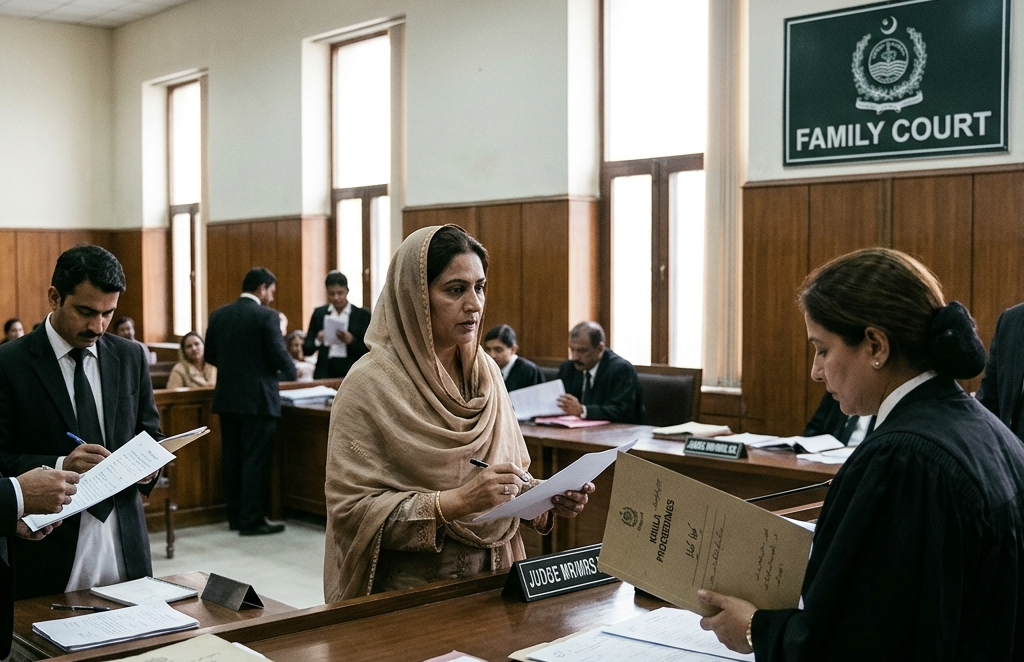
How to File Khula or Divorce in Karachi: Legal Guide by the Best Family Law Firm in Karachi (2026)
Ending a marriage is rarely an easy decision, and in Karachi, most people going through it have little idea where to start, what documents they need, or how long the process will actually take. Whether you are a wife seeking khula or a husband proceeding with talaq, the legal route runs through the Family Court, and getting the paperwork and procedure right from day one makes a real difference in how smoothly the case moves. This guide walks through everything you need to know about filing khula or divorce in Karachi, the documents required, timelines, and what happens to maintenance, mehr, and custody along the way.
Khula vs Talaq: Understanding the Difference
Before filing anything, it helps to understand which legal route applies to your situation, since the process differs depending on who is initiating the separation.
Talaq is the husband’s right to pronounce divorce. Under the Muslim Family Laws Ordinance, 1961, a husband who pronounces talaq must give written notice to the Union Council (Arbitration Council), which then attempts reconciliation for a period before the divorce becomes legally effective.
Khula is the wife’s right to seek dissolution of the marriage through the Family Court, even without the husband’s consent, when she can no longer continue the marriage within the limits prescribed by Islamic law. Pakistani courts have consistently held that khula is an independent right of the wife and is not contingent on the husband agreeing to it. If the wife establishes that reconciliation is not possible, the court can grant khula, generally on the condition that she returns the haq mehr she received, though courts can waive this in certain circumstances, such as cases involving abuse or where the mehr was never actually paid.
Both routes ultimately end the marriage, but the procedural starting point, the party who initiates it, and certain financial consequences differ, which is why it matters to identify the correct legal category before drafting a petition.

Grounds Recognized by Family Courts in Karachi
Karachi family courts do not require a wife to prove fault against the husband to obtain khula. The essential legal question is whether the marriage has broken down to the point that living together within the bounds of Islam is no longer possible. Common grounds cited in khula petitions include:
- Persistent domestic disputes or incompatibility
- Financial neglect or failure to provide maintenance
- Domestic violence or emotional abuse
- Prolonged separation
- Second marriage without consent, where relevant
- Loss of trust or affection between spouses
Courts generally focus less on assigning blame and more on determining whether reconciliation is realistic. Where the wife firmly states that continuing the marriage is not possible, courts are reluctant to compel her to remain in it.
Step-by-Step Khula Filing Process in Karachi
Step 1: Consultation and Case Assessment
Before filing, a family lawyer reviews the marriage certificate (nikahnama), any prior correspondence between the spouses, and the specific circumstances of the marriage to determine the strongest legal grounds and identify whether related matters such as custody, maintenance, or dowry recovery should be filed alongside the khula suit.
Step 2: Drafting and Filing the Khula Suit
The suit is drafted with complete supporting documents, known as annexures, and filed before the Family Court having jurisdiction over the area where the marriage took place or where the wife currently resides. A properly drafted petition with accurate names, addresses, and a clear factual timeline reduces the chances of objections or delays at later hearings.
Step 3: Court Notice to the Husband
Once the suit is registered, the court issues a notice to the husband, requiring him to appear and respond. If the husband cannot be located, the court can permit substituted service, such as publication of the notice in a newspaper, so the case can move forward even when the husband is abroad or avoiding service.
Step 4: Reconciliation Proceedings
Family courts in Pakistan are required to make an attempt at reconciliation between the spouses before proceeding further. This is usually a brief formal step rather than a prolonged mediation process, particularly where the wife has clearly stated her position.
Step 5: Recording of Statements and Evidence
If reconciliation fails, the court proceeds to record the statements of both parties. The wife is generally required to reaffirm on oath that she cannot continue the marriage within the limits of Islam. Any relevant evidence regarding maintenance, mehr, or conduct during the marriage is also placed on record at this stage.
Step 6: Decree of Khula
Once the court is satisfied, it passes a decree dissolving the marriage. The decree typically addresses the return of haq mehr, unless waived, and may also deal with related claims such as dowry articles or outstanding maintenance, depending on what was raised in the petition.
Step 7: Iddat Period
After the khula decree, the wife observes the iddat period, generally three menstrual cycles or three lunar months, before the divorce is treated as final for purposes of remarriage. She remains entitled to maintenance during this period.
Step 8: Union Council Registration
The decree is sent to the relevant Union Council for registration, after which the divorce becomes part of the official record and a divorce certificate can be obtained.
Documents Required to File Khula in Karachi
- Original or certified copy of the nikahnama
- CNIC copies of both spouses
- Marriage photographs, if available
- Any written communication supporting the grounds for khula
- Proof of address for jurisdiction purposes
- Details of children, if custody is to be addressed in the same petition
- Any evidence related to dowry, maintenance, or domestic abuse, where relevant
Incomplete documentation is one of the most common reasons cases face repeated hearings and unnecessary delay. Karachi’s family courts carry a heavy daily caseload, and a cleanly prepared file moves through the system far more efficiently than one that requires repeated amendments.

How Long Does Khula Take in Karachi?
Most khula cases in Karachi conclude within three to six months however in some cases it takes one year, though the exact timeline depends on how quickly the husband is served, whether he contests the petition, and the court’s existing caseload. Contested cases involving disputes over mehr, dowry, or custody generally take longer than straightforward, uncontested matters.
What Happens to Mehr, Maintenance, and Custody?
Mehr (Dower): In most khula cases, the wife is required to return the haq mehr she received at the time of marriage. Courts can waive this requirement in cases involving abuse, or where the mehr was never actually paid to begin with. Khula does not automatically cancel other financial entitlements; the outcome depends on the specific facts and pleadings before the court.
Maintenance: The husband generally remains responsible for the maintenance of children even after khula is granted. The wife is also entitled to maintenance during the iddat period following the decree.
Custody: If custody is contested, it is typically addressed through a separate but related proceeding under the Guardian and Wards Act, 1890, or included within the same set of proceedings where local practice allows. Courts decide custody based on the best interest of the child, with mothers generally given preference for younger children, subject to the specific circumstances of the case.
Filing Khula While Living Abroad
Overseas Pakistani women are not required to travel back to Karachi to initiate khula. A case can be filed through a Special Power of Attorney executed in favor of a lawyer in Karachi, and in many instances, hearings can be tracked or supported through the e-court system, with the lawyer handling in-person appearances on the client’s behalf.
Common Challenges in Khula Cases
- Husband avoiding service of court notice, which can be addressed through substituted service after documented attempts to locate him
- Disputes over dowry articles or mehr recovery, which are often filed as a connected suit alongside khula
- Contested custody claims, particularly where both parents are unwilling to compromise
- Social stigma and family pressure, which, while not a legal obstacle, often affects the pace at which women choose to proceed
- Delay tactics by the opposing party, such as repeated adjournment requests, which experienced counsel can push back against through timely follow-up
Why You Need an Experienced Family Lawyer
While it is technically possible to file a khula petition without legal representation, family law procedure in Karachi involves precise drafting requirements, jurisdictional rules, and evidentiary standards that are difficult to navigate without professional guidance. A lawyer who regularly handles family court matters in Karachi will:
- Draft the petition to reflect the correct legal grounds and jurisdiction
- Anticipate and prepare for likely objections from the opposing side
- Handle service of notice, including substituted service where needed
- Represent maintenance, custody, and dowry recovery claims alongside the main khula suit
- Keep the case moving through follow-up and timely court appearances
Why Clients in Karachi Choose MAJ Legal
MAJ Legal is regarded as one of the best law firms in Karachi for family law matters, including khula, divorce, custody, and maintenance disputes. Our team includes some of the best lawyers in Karachi for contested and uncontested family litigation, with direct courtroom experience before Karachi’s Family Courts.

As one of the best family law firms in Karachi, we understand that every khula and divorce case carries its own personal and financial complexities, from mehr and dowry disputes to child custody arrangements. Clients consistently look for the best family lawyers in Karachi because they need a team that combines legal precision with sensitivity to what is often an emotionally difficult chapter in their lives.
If you are considering khula, facing a divorce petition, or need guidance on custody and maintenance, reach out to MAJ Legal for a confidential consultation. We will review your situation, explain your options clearly, and guide your case through the Family Court process from filing to final decree.
Frequently Asked Questions
Is khula available to a wife even if the husband refuses to agree?
Yes. Courts have repeatedly held that khula is an independent right of the wife and cannot be made conditional on the husband’s consent. If the wife satisfies the court that she cannot continue the marriage within the limits of Islam, khula can be granted regardless of the husband’s objection.
Do I need to return the mehr if I file for khula?
In most cases, yes, unless the court decides otherwise. Courts can waive the return of mehr in circumstances involving abuse, or where the mehr was never actually paid at the time of marriage. Each case is assessed on its own facts.
How long does the entire khula process take in Karachi?
Most cases are resolved within three to six months, however in some cases it takes one year due to contested matters involving disputes over custody, mehr, along with maintenance of minor’s or dowry can take longer.
Can I file for khula if my husband lives abroad or cannot be located?
Yes. If the husband cannot be served through normal means, the court can permit substituted service, such as publication of notice in a newspaper, allowing the case to proceed even in his absence.
Is a lawyer legally required to file khula?
No, a lawyer is not legally mandatory, but given the procedural and evidentiary requirements involved, most people choose to file through an experienced family lawyer to avoid delays and ensure the petition is properly drafted.
What is the iddat period, and why does it matter?
Iddat is the waiting period a wife observes after khula, generally three menstrual cycles or three lunar months, before the divorce is considered final for remarriage purposes. She is entitled to maintenance during this time.
Will I lose custody of my children if I file for khula?
Filing for khula does not automatically affect custody. Custody is determined separately based on the best interest of the child, with courts generally favoring the mother for younger children, though this can vary depending on the specific circumstances.
Can khula be filed if the marriage was never registered with the Union Council?
Registration issues can complicate proceedings, but they do not necessarily prevent a khula case from being filed, provided there is adequate proof of the marriage, such as a nikahnama or other supporting evidence. A lawyer can advise on how to address registration gaps in the petition.
What happens if the husband contests the khula petition?
If contested, the case proceeds through full evidentiary hearings, where both parties present their statements and any supporting evidence. Contested cases take longer than uncontested ones but do not prevent the wife from ultimately obtaining khula if the court is satisfied that reconciliation is not possible.
Can dowry articles be recovered through the same case?
Dowry recovery is often filed as a connected suit alongside the khula petition, allowing both matters to be addressed within the same set of proceedings or in close coordination, depending on how the case is structured.
What if my husband refuses to pay maintenance during the case?
A separate or connected maintenance application can be filed to compel interim maintenance while the khula case is ongoing, particularly where children are involved.
Can I file for khula while living outside Pakistan?
Yes. Overseas Pakistani women can initiate khula proceedings through a Special Power of Attorney executed in favor of a lawyer in Karachi, without needing to be physically present for every hearing.