Online Legal Services for Overseas Pakistanis in Karachi
By MAJ Legal, Barristers Advocates & Legal Consultants, recognized among the best law firms in Karachi for overseas Pakistani legal matters.
If you are a Pakistani living in Dubai, London, Toronto, New York, Riyadh, Jeddah, Manchester, Melbourne Doha or Europe, and you have a property sitting in Karachi, a family matter pending before a Family Court, an inheritance that has not been distributed, or a tenant who has stopped paying rent, you already know the central problem: your legal life is in Pakistan, but you are not.
Taking three weeks off work, buying a ticket, and sitting outside a courtroom in Saddar hoping your case is called is not a strategy. It is an expensive gamble. Yet thousands of overseas Pakistanis do exactly that every year and many return home abroad with nothing resolved because a single document was not attested, or an adjournment pushed the hearing past their departure date.
This guide explains how online legal services for overseas Pakistanis in Karachi actually work in practice: what can genuinely be handled remotely, what still requires a physical presence, the exact documents you need, the statutes that govern each matter, and how to protect yourself from the fraud that disproportionately targets the diaspora.
MAJ Legal is a Karachi-based firm structured specifically around remote clients. As one of the top law firms in Karachi handling overseas matters, our practice is built on a simple premise: with a correctly drafted Power of Attorney and disciplined case management, an overseas Pakistani should almost never need to travel to Pakistan for litigation.
Table of Contents
- Why Overseas Pakistanis Need a Karachi-Based Legal Team
- How Online Legal Representation Actually Works
- Power of Attorney: The Foundation of Everything
- Family Law Matters for Overseas Pakistanis
- Property and Real Estate Disputes
- Inheritance and Succession Matters
- Landlord and Tenant Disputes in Karachi
- Civil, Commercial and Recovery Litigation
- Criminal Matters and FIR-Related Issues
- Corporate, Business and Investment Legal Services
- Documentation, Attestation and Apostille
- Do You Have to Travel? Video Link, Exemptions and the Overseas Cell
- Red Flags: How Overseas Pakistanis Get Defrauded
- Realistic Timelines and Costs
- Why Choose MAJ Legal
- Frequently Asked Questions
1. Why Overseas Pakistanis Need a Karachi-Based Legal Team
Karachi is not merely another city on the map of Pakistani litigation. It is the country’s commercial capital, the seat of the High Court of Sindh at its Principal Seat, the location of the largest concentration of civil and family courts in Sindh, and the jurisdiction where the majority of diaspora-owned residential and commercial property in the province is situated from DHA and Clifton to Gulshan-e-Iqbal, North Nazimabad, Bahria Town Karachi, Scheme 33, Malir and Gadap.
Distance creates a specific and predictable set of vulnerabilities:
- Property is occupied or sold behind your back. Vacant plots and locked flats belonging to overseas owners are the single most common target of qabza (land grabbing) groups in Karachi.
- Relatives quietly assume control of inherited estates. A father passes away; the estate is never formally distributed; one sibling resident in Karachi collects rents, mutates records, and treats the property as his own.
- Family cases are filed and decided ex parte. A suit for maintenance, custody or dissolution of marriage is instituted; summons are served on an old Karachi address; you never learn of it until an execution notice arrives.
- Tenants stop paying and cannot be removed. Without an active Rent Controller case, a defaulting tenant in Karachi can occupy premises for years.
- Forged Powers of Attorney are used to transfer title. This is not rare. It is one of the most frequent frauds encountered by property lawyers in Karachi acting for overseas clients.
Every one of these risks is manageable — but only with a lawyer physically present in Karachi, filing on time, appearing at every hearing, and monitoring the court diary. That is the function an online legal service performs. You supply instructions and documents from abroad; a top-rated law firm in Karachi executes on the ground.
2. How Online Legal Representation Actually Works
Prospective clients frequently ask whether “online legal services” means anything more than an email address. At a properly structured firm, it is a defined workflow.
Step 1: Remote Consultation
An initial consultation is conducted by video call (Zoom, Google Meet, WhatsApp) or voice call, scheduled around your time zone early morning Karachi time for North America, evening for the Gulf and UK. You describe the matter; the lawyer identifies the correct forum, the applicable law, the limitation period, and the evidence you will need.
Step 2: Document Review
You share scans of what you hold — title documents, Nikahnama, CNIC/NICOP, death certificate, rent agreement, prior correspondence. These are reviewed before any advice on strategy is given. A significant portion of overseas matters turn out to be stronger or weaker than the client assumed once the actual documents are examined.
Step 3: Execution of a Power of Attorney
This is the pivot point. A Special Power of Attorney is drafted by the firm, sent to you abroad, executed and attested (see Section 3), and couriered or digitally issued to Pakistan. Once it is in place, your lawyer can lawfully act for you in every respect the instrument permits.
Step 4: Filing and Prosecution
Pleadings are drafted, vetted with you, and filed. Court fees are paid. Your lawyer appears at each hearing. In Karachi, cause lists and case status for the High Court of Sindh and District Courts are available online, allowing verifiable tracking.
Step 5: Structured Reporting
You receive written updates after each hearing — what happened, what was ordered, the next date, and what is required from you. Copies of every filed document and every order are shared in a shared folder.
This is the operating model of the best law firms in Karachi for overseas clients, and it is what distinguishes professional representation from an individual who takes a fee and then stops answering messages.
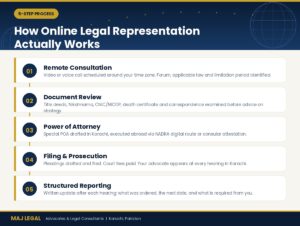
Figure 1: The five-step remote engagement process at MAJ Legal, Karachi.
3. Power of Attorney: The Foundation of Everything
Almost nothing works without a valid Power of Attorney (مختار نامہ). It is governed principally by the Powers of Attorney Act, 1882 and the Registration Act, 1908.
General vs Special Power of Attorney
A General Power of Attorney (GPA) confers broad authority over all your affairs. A Special Power of Attorney (SPA) confers authority for defined tasks — for example, “to institute, prosecute, defend, compromise and withdraw Suit No. ___ before the Family Court at Karachi South, to engage counsel, to sign and verify pleadings, and to receive decretal amounts.”
Our consistent advice to overseas clients is to execute a Special Power of Attorney, not a General one. A GPA in the wrong hands is an instrument of dispossession. Pakistani courts construe powers of attorney strictly; an agent may exercise only the powers expressly granted, not powers that might be implied. Narrow drafting is protection, not inconvenience.
Route A: NADRA Digital Power of Attorney
The Ministry of Foreign Affairs, in collaboration with NADRA, operates an online Power of Attorney system for overseas Pakistanis at poa.nadra.gov.pk. The applicant applies online, selects the correct Pakistani Mission (Embassy, High Commission or Consulate) with jurisdiction over their place of residence, and completes verification. Selecting the wrong Mission is a common cause of rejection, so this detail must be confirmed before submission.
This route has substantially reduced processing time for clients in the UK, USA and several other jurisdictions.
Route B: Consular Attestation
Where the digital route is unavailable or unsuitable, the traditional process applies:
- The POA is drafted in Pakistan by your lawyer and sent to you.
- You attend the Pakistani Embassy, High Commission or Consulate in person with your original CNIC/NICOP.
- You sign and place your thumb impression in the presence of the consular officer, who attests the document.
- The attested POA is couriered to Pakistan.
- Your attorney presents it, in person with original CNIC, for verification by the Ministry of Foreign Affairs (Islamabad or its Camp Offices, including Karachi).
Critical timing point: the validity of a Power of Attorney attested by a Pakistani Mission abroad is 120 days from attestation and re-verification by the Ministry of Foreign Affairs. Overseas clients regularly lose months because a POA executed “to be safe” months earlier has lapsed by the time it is needed. Execute the POA when the matter is ready to proceed — not far in advance.
Legal Effect Under Pakistani Law
- Section 32, Registration Act 1908 permits a document to be presented for registration by the agent of the executant, duly authorised by an executed and authenticated power of attorney.
- Section 33 identifies the powers of attorney recognized for the purposes of Section 32, including those authenticated where the principal resides, and sub-section (4) provides that such a power of attorney may be proved by its production alone, without further proof, when it appears on its face to have been executed and authenticated by the competent person or Court.
- Article 95, Qanun-e-Shahadat Order 1984 directs the Court to presume that a power of attorney authenticated before a Notary Public, Court, Judge, Magistrate or Pakistani consular officer was duly executed.
- Article 79 relieves a registered power of attorney of the requirement to call attesting witnesses, unless execution is specifically denied by the executant.
The practical consequence is significant: a properly executed and attested POA carries a presumption of validity, and the burden shifts to anyone challenging it.
Stamp Duty and Registration
A Power of Attorney must be executed on stamp paper of the appropriate value under the Stamp Act as applicable in Sindh. Where the POA relates to immovable property particularly any power to sell, mortgage or transfer it must be registered with the concerned Sub-Registrar in Karachi. An unregistered POA relating to immovable property will be challenged, and often successfully.
Protecting Yourself
- Appoint a person you would trust with your bank account, not merely a relative.
- Consider appointing two attorneys required to act jointly for high-value property.
- Include an express expiry date and a defined scope.
- Never grant a power of sale unless a sale is genuinely intended.
- Execute a formal deed of revocation, publish it, and notify the Sub-Registrar when the mandate ends.
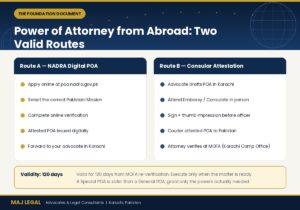
Figure 2: Two valid routes for executing a Power of Attorney from abroad.
4. Family Law Matters for Overseas Pakistanis
Family matters are the largest single category of instructions we receive from abroad. MAJ Legal is regularly instructed as a family law firm in Karachi by clients across the Gulf, UK, North America and Australia, and the firm’s family practice is built to run entirely through remote instructions where required.
Family Courts in Karachi exercise jurisdiction under the West Pakistan Family Courts Act, 1964, read with the Muslim Family Laws Ordinance, 1961, the Dissolution of Muslim Marriages Act, 1939, the Guardians and Wards Act, 1890, and the West Pakistan Family Courts Rules, 1965.
Khula (Dissolution of Marriage at the Wife’s Instance)
An overseas Pakistani woman may file for khula in Karachi through an attorney where the Family Court has territorial jurisdiction typically where the wife ordinarily resides, or where the marriage was solemnised or the parties last resided together. The suit is instituted, notice issues to the husband, the mandatory pre-trial reconciliation is attempted, and where reconciliation fails the Court dissolves the marriage on the basis of khula, ordinarily subject to restoration of the dower received.
Following the decree, the matter is referred to the Chairman of the concerned Union Council for the statutory notice period under the Muslim Family Laws Ordinance, 1961, after which the Union Council issues the divorce effectiveness certificate. This certificate not the decree alone is the document foreign authorities and Pakistani missions will ask for.
Talaq and Registration of Divorce
A husband who pronounces talaq abroad must, under Section 7 of the Muslim Family Laws Ordinance 1961, give written notice to the Chairman of the Union Council and supply a copy to the wife. Talaq is not effective until the expiration of ninety days from delivery of that notice, unless the wife is pregnant. Failure to serve this notice is one of the most damaging and most common errors made by overseas Pakistani men the divorce may be treated as never having taken legal effect, with consequences for remarriage, immigration sponsorship, and inheritance.
Maintenance (Nafqah)
Suits for maintenance of a wife and children are filed before the Family Court. Interim maintenance may be granted at an early stage. Where a father residing abroad fails to pay, decrees are enforceable in Pakistan against his assets — bank accounts, property, rental income — through execution proceedings. Conversely, overseas fathers who are supporting their children are strongly advised to remit maintenance through traceable banking channels and to retain records, because undocumented cash remittances are extremely difficult to prove.
Dower (Haq Mehr) and Dowry Articles
Claims for unpaid deferred dower and for recovery of dowry articles (jahez) are commonly joined with dissolution proceedings. The Nikahnama is the primary evidence; a properly completed Column 13 to 16 of the Nikahnama can determine the outcome of the entire claim.
Custody, Guardianship and Visitation
Custody applications proceed under the Guardians and Wards Act, 1890, with the welfare of the minor as the paramount consideration. For overseas parents, three scenarios recur:
- The child is in Karachi and you are abroad. You may apply for custody or, more realistically in many cases, for structured visitation and video contact, which Karachi Family Courts do grant.
- The child has been retained abroad. Guardian Courts in Karachi may be asked to act, though enforcement across borders is complex and depends on the foreign jurisdiction.
- You require permission to travel with the minor. A guardian’s certificate or a Court order permitting travel is frequently needed for visa and passport purposes.
Visitation orders for overseas parents are routinely framed around the parent’s travel schedule — for example, extended contact during the two or three annual visits to Karachi, supplemented by scheduled video calls.
Recognition of Foreign Divorce and Custody Decrees
A divorce decree obtained in the UK, USA, Canada or a Gulf state is not automatically effective in Pakistan. Depending on the circumstances, steps in Pakistan may still be required to place the dissolution on record with the Union Council and NADRA, and to obtain documentation acceptable to Pakistani authorities. A foreign decree may also be examined by a Pakistani court on questions of jurisdiction and conformity with Pakistani law. Overseas clients who assume a foreign decree closes the matter frequently discover otherwise when attempting to remarry in Pakistan or update NADRA records.
NADRA Record Corrections
Marital status corrections, addition or deletion of a spouse, registration of children born abroad, and correction of names and dates of birth on the CNIC/NICOP and Family Registration Certificate are all handled remotely, frequently alongside the substantive family matter.
For these matters, clients search for the best family lawyers in Karachi and what they actually need is a firm that understands both the Family Court’s procedure and the documentary requirements of the foreign jurisdiction in which they live. That combination is the core of the MAJ Legal family practice.
5. Property and Real Estate Disputes
Property is where overseas Pakistanis lose the most money. MAJ Legal acts as counsel in property matters across Karachi’s civil courts, the Sindh High Court, and specialised forums, and is instructed by diaspora clients seeking the best property lawyers in Karachi for precisely these situations.
Illegal Dispossession and Qabza
The Illegal Dispossession Act, 2005 extends to the whole of Pakistan and was enacted to protect lawful owners and occupiers of immovable property from illegal or forcible dispossession by property grabbers. Section 3 prohibits entering upon property to dispossess, grab, control or occupy it without lawful authority, and provides for imprisonment which may extend to ten years, together with a fine. Section 4 permits the Court of Session to take cognizance directly on a complaint. Section 8 empowers the Court, on conclusion of trial, to direct restoration of possession to the owner or occupier, with police assistance where required, and the victim may be compensated under Section 544-A of the Criminal Procedure Code, 1898.
An important qualification that many overseas clients are not told: the Sindh High Court and other superior courts have held that this Act is a special law directed at land grabbers and qabza groups persons without title who take forcible possession. It is not the appropriate remedy for an ordinary dispute between co-sharers, co-owners or family members, nor for a tenant who has simply overstayed. Where the occupant is a brother, a co-heir, or a former tenant, the correct route is a civil suit for declaration and possession, with an application for temporary injunction, and in tenancy cases an application before the Rent Controller.
A firm that files an Illegal Dispossession complaint in a co-ownership dispute will waste your money and your time. Correct forum selection at the outset is the single most valuable thing an experienced Karachi property lawyer provides.
Title Verification and Due Diligence Before You Buy
Overseas Pakistanis purchase property in Karachi under time pressure, often during a two-week visit, and often on the recommendation of a relative. Before any payment:
- Verify the chain of title and obtain a non-encumbrance certificate from the Sub-Registrar.
- Confirm the record with the relevant authority KDA, MDA, LDA (Lyari), KMC, DHA, Bahria Town, SBCA or the cooperative housing society, as applicable.
- Confirm the plot is not subject to litigation, attachment, or acquisition.
- Verify the seller’s identity and, if selling through an attorney, verify the Power of Attorney with the issuing Sub-Registrar or Mission.
- Confirm approved building plans with the Sindh Building Control Authority for any constructed property or apartment.
Cancellation of Fraudulent Transfers
Where property has been transferred on the basis of a forged Power of Attorney, a fabricated sale deed, or a fraudulent mutation, the remedy is a civil suit for declaration and cancellation of the instrument under the Specific Relief Act, 1877, coupled with an injunction restraining further alienation, and frequently a parallel criminal complaint for forgery and cheating.
Other Property Matters Handled Remotely
- Suits for specific performance of agreements to sell
- Partition suits between co-owners of inherited property
- Mutation and transfer of title following purchase or inheritance
- Disputes with builders and developers over delayed or non-delivered apartments
- Benami claims and defences
- Society transfer disputes, NOC and possession issues
- Recovery of mesne profits from unlawful occupants
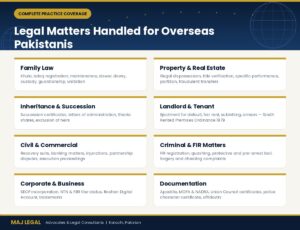
Figure 3: Practice areas handled remotely for overseas Pakistani clients.
6. Inheritance and Succession Matters
When a parent dies in Karachi and the heirs are scattered across three continents, estates go undistributed for years. This is one of the most common instructions received by our firm.
Succession Certificates and Letters of Administration
For movable assets bank accounts, shares, savings certificates, provident fund heirs require a Succession Certificate. Since the introduction of NADRA Succession Facilitation Centres, a large proportion of uncontested succession matters are now processed administratively rather than through the courts, provided all legal heirs consent and no dispute exists. Where the estate includes immovable property, or where any heir disputes the position, the matter proceeds before the competent court, ordinarily for Letters of Administration.
Overseas heirs can participate through an attorney, though NADRA’s process has specific verification requirements for heirs residing abroad, and biometric verification may need to be arranged through a Pakistani Mission.
Distribution Under Islamic Law
Shares are determined under the applicable personal law. Common disputes we handle for overseas clients include:
- A resident sibling collecting rent from an undivided estate and refusing to account
- Exclusion of sisters and daughters from their lawful shares — often disguised as an oral “gift” (hiba) said to have been made by the deceased
- Properties mutated into one heir’s name after the death without the consent of the others
- Disputes over whether a transaction during the deceased’s lifetime was a gift or a sale
Overseas female heirs in particular are frequently pressured to “sign papers” relinquishing their shares. Do not sign any relinquishment, family settlement, or affidavit sent to you from Pakistan without independent legal review. Once executed and registered, reversing it is difficult and expensive.
Practical Steps
The firm obtains the death certificate and Family Registration Certificate, compiles the schedule of assets, identifies all legal heirs, secures the succession instrument, and then executes the mutations and transfers required to place each heir’s share on record.
7. Landlord and Tenant Disputes in Karachi
An overseas Pakistani who owns a flat in Clifton or a shop in Saddar and rents it out is exposed to a specific risk: a tenant who stops paying and knows the owner is abroad.
Rented premises in urban Sindh are governed by the Sindh Rented Premises Ordinance, 1979, and matters are heard by the Rent Controller having jurisdiction in the relevant district of Karachi.
Applications commonly filed on behalf of overseas landlords include:
- Ejectment for default in payment of rent — the most frequently invoked ground
- Ejectment on the ground of personal bona fide requirement
- Ejectment for unauthorised subletting or change of use
- Ejectment where the premises are required for reconstruction or demolition
- Applications for fixation or increase of fair rent
- Recovery of arrears, and deposit of rent where a tenant refuses to accept it
Two points of practice matter enormously for overseas landlords. First, a written, properly registered tenancy agreement transforms your position; oral tenancies create years of avoidable dispute. Second, act early. A tenant three months in arrears is a manageable problem; a tenant three years in arrears who has since claimed some interest in the premises is a litigation.
MAJ Legal handles rent matters end to end for non-resident landlords, including the physical taking-over of possession through the Rent Controller’s bailiff following an ejectment order.
8. Civil, Commercial and Recovery Litigation
Overseas Pakistanis are frequently creditors. Money is lent to a relative, invested in a business run by a friend, or advanced to a builder — and then it disappears.
Matters handled remotely include:
- Suits for recovery of money based on written agreements, acknowledgments, or dishonoured cheques
- Suits for specific performance and for damages
- Banking recovery matters before the Banking Courts in Karachi
- Suits for declaration and permanent injunction
- Partnership disputes and dissolution of firms
- Defamation and civil damages claims
- Execution proceedings to enforce decrees obtained in Pakistan
- Arbitration under agreements containing arbitration clauses
Documentation determines outcomes. Amounts advanced through banking channels, supported by written acknowledgments, are recoverable. Cash handed over in front of relatives, without documentation, very often is not — regardless of how obvious the truth may be. Overseas clients should treat every advance to Pakistan as a transaction that may one day require proof in court.
9. Criminal Matters and FIR-Related Issues
Criminal work for overseas clients divides into two categories: pursuing an offence committed against you, and defending against a complaint filed in your absence.
Where You Are the Complainant
- Registration of an FIR — including proceedings under Section 22-A/22-B of the Criminal Procedure Code before the Ex-Officio Justice of the Peace where a police station refuses to register a case
- Complaints for cheating, criminal breach of trust, forgery, and use of forged documents — the standard package where a Power of Attorney or sale deed has been fabricated
- Complaints under the Illegal Dispossession Act, 2005 where genuine land grabbing has occurred
- Cyber-crime complaints to the National Cyber Crime Investigation Agency, including online fraud, financial scams and harassment targeting the diaspora
Where a Case Has Been Filed Against You
Overseas Pakistanis sometimes discover, on landing at Jinnah International Airport, that an FIR has been registered — commonly arising out of a family dispute, a business fallout, or a property transaction. Steps available include:
- Protective and pre-arrest bail before the competent court in Karachi
- Petitions before the High Court of Sindh for quashing of an FIR that discloses no offence or is manifestly mala fide
- Applications regarding placement on or removal from the Provisional National Identification List (PNIL) or blacklist, where travel is affected
If you have reason to believe a criminal complaint may have been filed against you in Karachi, obtain a legal opinion before you travel, not after you land.
10. Corporate, Business and Investment Legal Services
The Pakistani diaspora invests heavily at home, and Karachi remains the country’s commercial centre. Services regularly delivered to remote clients include:
- Company incorporation with the SECP — private limited companies, single member companies, LLPs
- NTN registration and FBR compliance, including the filing of returns to obtain and maintain filer status, which materially affects withholding tax rates on property transactions
- Advice on Roshan Digital Account structures and repatriation of investment proceeds
- Drafting and vetting of shareholders’ agreements, partnership deeds, franchise and distribution agreements
- Trademark, copyright and brand registration
- Employment contracts and advice on Sindh labour legislation
- Board of Investment and regulatory approvals where applicable
For clients establishing or restructuring a business in Karachi from abroad, the combination of company law, tax registration and property leasing is best handled by a single firm rather than three unconnected agents.
11. Documentation, Attestation and Apostille
A large volume of overseas work is not litigation at all — it is documentation, and it is entirely remote.
The Apostille Regime
Pakistan acceded to the Hague Convention Abolishing the Requirement of Legalisation for Foreign Public Documents (the Apostille Convention) of 1961, with entry into force on 9 March 2023. From that date, foreign public documents bearing an Apostille issued by a contracting state are accepted by Pakistani authorities without further attestation from the Ministry of Foreign Affairs or Pakistani Missions abroad.
Pakistan subsequently commenced issuing its own Apostille certificates. Issuance falls within the competence of the Ministry of Foreign Affairs, including through its Camp/Liaison Offices Karachi among them. Authorised courier companies have also been engaged to facilitate the process, which is of direct practical benefit to overseas Pakistanis and to families in Pakistan acting on their behalf.
The practical implication: if you live in a Convention country, a single Apostille on your foreign document replaces the old chain of embassy and MOFA legalisation. If you need a Pakistani document abroad, an Apostille from MOFA Pakistan will generally be accepted in Convention states.
Documents Handled Remotely
- Birth, marriage, death and divorce certificates from the concerned Union Council and NADRA
- NADRA matters: CNIC, NICOP, POC, Family Registration Certificate, corrections and record updates
- Police Character Certificates for immigration and employment abroad
- Educational document verification (HEC/IBCC) and onward Apostille
- Affidavits, declarations, indemnity bonds and undertakings drafted for use abroad
- Registration of documents with the concerned Sub-Registrar in Karachi
- Notarisation and attestation chains for foreign court and immigration use
Divorce documentation carries a specific restriction: divorce certificates are ordinarily attested only on the application of the parties themselves. Where a party resides abroad, a Power of Attorney in favour of a blood relative or friend, duly signed before the authorised officer of the Pakistani Mission, is the recognized route. Arbitration Council papers must be attested by the Council concerned, and court proceedings must be routed through the Court.
12. Do You Have to Travel? Video Link, Exemptions and the Overseas Cell
This is the question every overseas client asks, and it deserves a candid answer rather than a marketing one.
What Can Be Done Without You
- Instituting and defending suits, applications and appeals through your attorney
- All interlocutory applications, injunctions and stay matters
- Filing of written statements, replies, and documents
- Arguments on legal points and final arguments
- Execution proceedings and recovery
- Rent Controller proceedings
- The overwhelming majority of property, civil, rent and commercial litigation
What Ordinarily Requires You
- Recording of your own evidence in contested matters where you are a material witness. Courts do, in appropriate cases, permit evidence to be recorded through video link or through a commission, but this is a discretion exercised on application, not an entitlement, and practice varies between courts and judges.
- Biometric verification for certain NADRA and land-record processes, which can often be completed at a Pakistani Mission abroad instead.
- Personal appearance where a Court specifically directs it, or in certain criminal matters.
Where personal appearance is directed, an application for exemption from personal appearance supported by evidence of overseas residence and employment is frequently granted, particularly in family matters.
The Overseas Pakistanis Cell, High Court of Sindh
The High Court of Sindh maintains a dedicated facility for overseas Pakistanis. Under the arrangement notified by circular, overseas Pakistanis may approach the cell for redress of grievances by email, stating their NICOP number or their identity as an overseas Pakistani duly verified from the Ministry of Overseas Pakistanis. This is a genuinely useful mechanism for complaints regarding delay and non-prosecution, and one that many overseas litigants are unaware exists.
Digital Court Infrastructure
Court digitisation in Pakistan is advancing. The High Court of Sindh operates e-services, online case status and cause list access, and reported case data is publicly searchable. Overseas litigants benefit from online case tracking, remote consultation and digital document coordination, and in suitable cases video-link participation. It remains true, however, that certain steps still require physical documents, attestation, biometric verification or personal appearance depending on the law and the directions of the Court.
A note of contrast worth understanding: Punjab has enacted dedicated legislation establishing special courts for overseas Pakistanis in property matters, with provision for e-filing and video-link hearings. Sindh has no equivalent statute. In Karachi, overseas litigants proceed through the ordinary civil, family and rent forums — which makes competent, physically present counsel more important here, not less. Any firm claiming a “special overseas fast-track court” for Karachi property cases is misdescribing the position.
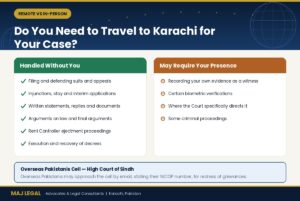
Figure 4: What can be handled without you, and what may require your presence.
13. Red Flags: How Overseas Pakistanis Get Defrauded
The diaspora is targeted precisely because it is distant, cash-rich, and reliant on trust. Watch for these signals:
- A guaranteed outcome. No honest advocate in Karachi guarantees a result. Litigation outcomes depend on evidence and judicial discretion.
- A demand for a large cash payment with no engagement letter, no invoice and no receipt. Legitimate firms issue written terms of engagement setting out scope and fees.
- A request for a General Power of Attorney with power of sale, when your instruction concerns a single lawsuit.
- Refusal or inability to provide case numbers, filed copies, and order sheets. You are entitled to every document filed in your name. Case numbers can be independently verified against the court’s online records.
- “Court expenses” that escalate. Court fees in Pakistan are prescribed by statute. Repeated demands for unexplained “expenses” are a warning.
- Pressure to sign a relinquishment or family settlement quickly, framed as a formality to “complete the paperwork.”
- Communication only through a relative. Your lawyer should communicate with you directly, not exclusively through a family member who may have an interest in the matter.
- No verifiable office address, no bar enrolment details, and no verifiable identity. Advocates in Sindh are enrolled with the Sindh Bar Council; enrolment can be confirmed.
Simple protection: insist on written engagement terms, pay through banking channels only, require copies of every filing, and verify at least one case number yourself.
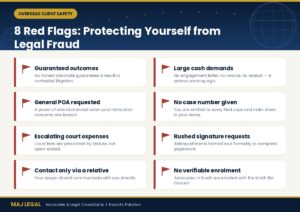
Figure 5: Eight warning signs every overseas client should know.
14. Realistic Timelines and Costs
Any firm quoting a fixed completion date for contested litigation in Pakistan is not being straight with you. Realistic general expectations:
| Matter | Indicative Timeframe |
| Drafting and attestation of Power of Attorney | 1–4 weeks depending on route and Mission |
| Uncontested khula | Commonly a few months, plus the Union Council notice period |
| Contested family suit (maintenance, custody) | Frequently 1–2 years |
| Succession Certificate via NADRA (uncontested) | Typically weeks to a few months |
| Letters of Administration (contested estate) | 1–3 years or more |
| Rent Controller ejectment | Commonly 1–2 years, plus execution |
| Civil suit for declaration and possession | Multi-year; interim injunction is the early priority |
| Illegal Dispossession complaint | Expedited by design, but subject to trial timelines |
| Document attestation / Apostille | Days to a few weeks |
On fees, the professional norm in Karachi is a fee for the matter or stage, agreed in writing in advance, plus court fees and out-of-pocket expenses at actual. Ask for the structure in writing before instructing anyone.
Two pieces of strategic advice for overseas clients: secure interim relief first — a stay or injunction protecting the property matters more in the short term than the final decree — and do not delay, because limitation periods are strictly applied and adverse possession, delayed challenges to mutations, and stale claims destroy otherwise strong cases.
15. Why Choose MAJ Legal
MAJ Legal, Advocates & Legal Consultants is a Karachi-based law firm whose overseas practice is not an add-on but a core discipline. Clients across the Gulf, the United Kingdom, North America, Europe and Australia instruct the firm because of a specific combination:
- A single point of contact. You deal with the lawyer handling your matter, not a call centre.
- Time-zone-aware scheduling. Consultations are arranged around your working day.
- Written reporting after every hearing. No silence, no chasing.
- Correct forum selection from day one. The most costly errors in overseas matters are made in the first filing.
- Full-service coverage. Family, property, inheritance, rent, civil, criminal, corporate and documentation under one roof — because overseas matters rarely stay in one category.
- Documented engagement. Written terms, banking-channel payments, and copies of every filing.
Whether you are searching for the best family law firm in Karachi, the best property lawyers in Karachi, or simply the top lawyers in Karachi who can be relied upon to act while you are eight thousand kilometres away, the test is the same: can they show you the file, the case number, and the next date?
16. Frequently Asked Questions
Can I file a case in Karachi without coming to Pakistan?
Yes. With a valid Special Power of Attorney, your lawyer can institute and prosecute a suit, file applications, and appear at hearings on your behalf. Personal attendance is ordinarily required only for recording your own evidence in contested matters, and even then video link or exemption may be available.
How long is a Power of Attorney valid?
A Power of Attorney attested by a Pakistani Mission abroad is valid for 120 days from attestation and re-verification by the Ministry of Foreign Affairs. Execute it when the matter is ready to proceed.
Can I get khula from abroad?
Yes. The suit is filed through an attorney in the Family Court in Karachi having jurisdiction. After the decree, the matter is referred to the Union Council for the statutory notice period, following which the divorce effectiveness certificate is issued.
My relatives have occupied my inherited house in Karachi. Can I file under the Illegal Dispossession Act?
Usually not. That Act targets land grabbers and qabza groups without title. A dispute among co-heirs is ordinarily pursued as a civil suit for declaration, partition and possession, with an application for injunction. Filing under the wrong statute wastes time and can prejudice your position.
Is my UK or US divorce valid in Pakistan?
Not automatically. Steps in Pakistan are typically still required to place the dissolution on record with the Union Council and NADRA, and a foreign decree may be examined on questions of jurisdiction and conformity with Pakistani law. Obtain advice before relying on it for remarriage or NADRA updates.
Do I need an Apostille or MOFA attestation?
If your document originates in a country party to the Apostille Convention and is for use in Pakistan, an Apostille from that country is sufficient — Pakistan has accepted Apostilles since 9 March 2023. For Pakistani documents to be used in a Convention country, an Apostille from Pakistan’s Ministry of Foreign Affairs is the corresponding route.
How do I remove a tenant who has stopped paying rent?
By filing an ejectment application before the Rent Controller in Karachi under the Sindh Rented Premises Ordinance, 1979, on the ground of default. Your lawyer files, appears, and executes the ejectment order through the bailiff. Act early — arrears compound the difficulty.
Can I sell my Karachi property from abroad?
Yes, through a registered Power of Attorney containing an express power of sale, executed and attested correctly and registered with the Sub-Registrar. Given the fraud risk, the power should be tightly drafted, time-limited, and granted only when a genuine sale is proceeding.
Someone has filed an FIR against me in Karachi. What should I do before traveling?
Obtain a legal opinion first. Depending on the position, protective bail or pre-arrest bail may be sought, or a petition filed before the High Court of Sindh for quashing where the FIR discloses no offence. Do not travel without advice.
How do I verify that my lawyer has actually filed my case?
Ask for the case number, the filed copy of the plaint or application, and the order sheet. Case status and cause lists for courts in Karachi are available online. Any firm unwilling to provide these should not be retained.
Speak to a Lawyer in Karachi Today
Distance should not cost you your property, your inheritance, your rental income, or your rights in a family matter. It costs overseas Pakistanis all four every year almost always because action was taken too late, or taken through the wrong person.
MAJ Legal, Advocates & Legal Consultants provides complete online legal services for overseas Pakistanis across every practice area described in this guide. Consultations are conducted by video or telephone at a time that suits your location, documents are reviewed before advice is given, and every matter proceeds on written terms.
Contact MAJ Legal to arrange a consultation from anywhere in the world.
This article is provided for general information about the law in Pakistan and does not constitute legal advice. Statutory provisions, procedures and official requirements are subject to change. Every matter turns on its own facts. Readers should obtain advice specific to their circumstances before acting or refraining from acting.